Kukje Artists
Institutional Exhibitions
Kukje Artists
Institutional Exhibitions
NEWS
View all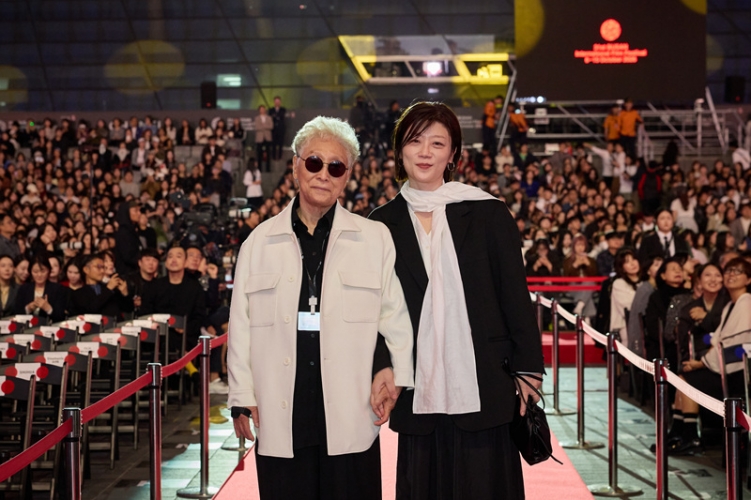
October 2026
Documentary Kim Yun Shin Punches In Premieres at the 31st Busan International Film Festival
Kim Yun Shin Punches In, a documentary exploring the life and artistic practice of Kim Yun Shin, premiered at the 31st Busan International Film Festival (BIFF) and was selected for the Wide Angle – Documentary Showcase section. The film marks the first installment of They Will Live Long, a documentary series produced by Production Pied-Joints that examines the lives and practices of women artists born before the 1953 Korean Armistice Agreement. Directed by Lim Sun-ae, the film offers an intimate portrait of Kim Yun Shin, following her daily life and creative process as she continues to work well into her nineties. The title, coined by the director, reflects an intention to present Kim not as a figure fixed within the spaces of museums or the context of art history, but as an artist actively shaping her practice in the present.
The film looks beyond Kim’s artistic practice to the relationships that have sustained her throughout her life. Born in 1935 in Wonsan, which is in present-day North Korea, Kim moved to Argentina at the age of 49 and spent nearly four decades working in South America before returning to Korea in 2023. Tracing this journey, the documentary moves beyond a retrospective account of her career to focus on the ongoing process of making art and living as an artist. It captures her work with wood and stone, alongside the bonds of solidarity she shares with the women around her, including family members and students, revealing the personal relationships and convictions that continue to inform her practice.
Kim Yun Shin became the first figure from the contemporary art world to walk the red carpet at BIFF’s opening ceremony. The documentary was screened three times during the festival. On October 10, Kim joined Lim Sun-ae for a post-screening conversation, reflecting on the film and her artistic journey. In response to an audience who asked what had enabled her to sustain her practice over the years, Kim replied, “Everything depends on your own spirit.” Her emphasis on inner strength as the foundation of confidence and perseverance speaks to the conviction that has sustained her life and work over the decades.
The documentary is slated for theatrical release in May 2027. Further projects are also extending the exploration of Kim Yun Shin’s life and work across different media. Following the publication of her biography by Ahn Graphics in June, a 48-minute version of the documentary is scheduled to air on EBS in 2027. Photographer Eun Chun is also developing an exhibition dedicated to the artist, provisionally titled Kim Yun Shin’s Atelier. Together, these initiatives across film, television, publishing, and exhibition-making offer new perspectives on Kim’s life and artistic practice, bringing her story and work to broader audiences.
The film looks beyond Kim’s artistic practice to the relationships that have sustained her throughout her life. Born in 1935 in Wonsan, which is in present-day North Korea, Kim moved to Argentina at the age of 49 and spent nearly four decades working in South America before returning to Korea in 2023. Tracing this journey, the documentary moves beyond a retrospective account of her career to focus on the ongoing process of making art and living as an artist. It captures her work with wood and stone, alongside the bonds of solidarity she shares with the women around her, including family members and students, revealing the personal relationships and convictions that continue to inform her practice.
Kim Yun Shin became the first figure from the contemporary art world to walk the red carpet at BIFF’s opening ceremony. The documentary was screened three times during the festival. On October 10, Kim joined Lim Sun-ae for a post-screening conversation, reflecting on the film and her artistic journey. In response to an audience who asked what had enabled her to sustain her practice over the years, Kim replied, “Everything depends on your own spirit.” Her emphasis on inner strength as the foundation of confidence and perseverance speaks to the conviction that has sustained her life and work over the decades.
The documentary is slated for theatrical release in May 2027. Further projects are also extending the exploration of Kim Yun Shin’s life and work across different media. Following the publication of her biography by Ahn Graphics in June, a 48-minute version of the documentary is scheduled to air on EBS in 2027. Photographer Eun Chun is also developing an exhibition dedicated to the artist, provisionally titled Kim Yun Shin’s Atelier. Together, these initiatives across film, television, publishing, and exhibition-making offer new perspectives on Kim’s life and artistic practice, bringing her story and work to broader audiences.
October 2026
SUPERFLEX Presents Come Hell Or High Water at ARKEN Museum of Contemporary Art in Ishøj, Denmark, Imagining the Future of Coexistence
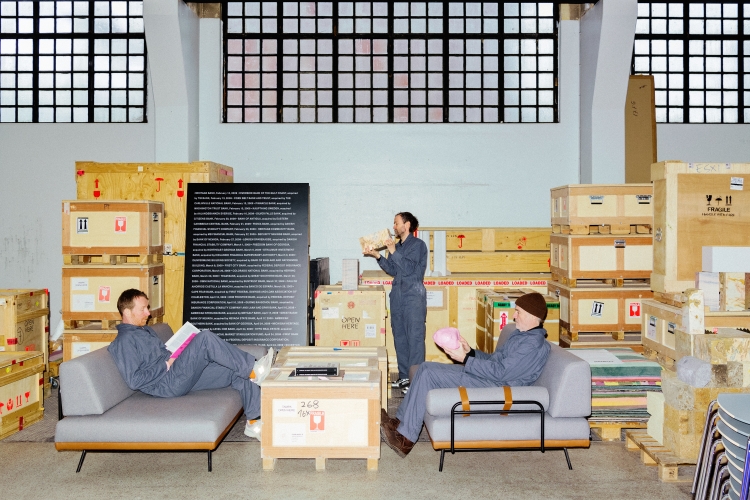
The Danish artists’ collective SUPERFLEX is presenting Come Hell or High Water at ARKEN Museum of Contemporary Art in Ishøj, Denmark. Spanning more than three decades of practice since the trio's formation in 1993, the exhibition imagines a distant future in which rising sea levels caused by climate change have submerged the museum. In this speculative scenario, the museum is transformed into a vast ark, where humans and other forms of life can coexist. Blue lighting, sandbags, and barricades at the entrance evoke the atmosphere of a museum sunk deep beneath the sea. Scattered throughout the exhibition, shipping crates contain works ranging from SUPERFLEX’s early pieces to its most recent productions, functioning both as an archive of past projects and as cargo to be carried into the future.
In recent years, SUPERFLEX has been developing structures that function simultaneously as artworks and habitats for marine life. At the center of the exhibition, the trio presents The Ark Factory, an ongoing project that produces components for larger ark. Using a specialized technology involving ice, SUPERFLEX creates artificial reef structures designed to serve as habitats for marine organisms. Visitors can observe firsthand the process of constructing a fragment of this immense ark. These structures will be installed beneath the sea afterwards, embodying SUPERFLEX’s broader practice of exploring possibilities for coexistence among diverse forms of life beyond the human.
Alongside these installations, three video works explore migration, borders, environmental issues, and survival through the motif of the sea. Kwassa Kwassa (2015) follows the production of fiberglass boats used for fishing and the smuggling of migrants in the Comoros archipelago in the Indian Ocean. The work reveals the precarious realities of migrants forced to undertake dangerous journeys, while exposing the political tensions surrounding borders. Two Suns (2024) draws on the history of the 67 nuclear bomb tests conducted by the United States in the Marshall Islands in the Pacific between 1946 and 1958. The title refers to the recollection of a survivor who described the explosion as resembling “two suns in the sky.” Meanwhile, All Is Water (2023) uses AI-generated narration to imagine the consciousness of a fish, connecting to the perspective of another species and moving beyond an anthropocentric worldview.
Through these works, Come Hell or High Water examines environmental and social issues through the sea, offering a critical perspective on power structures within the global economic system and contemporary modes of production and labor. At the same time, the exhibition explores ways in which human and nonhuman life might coexist in an ever-changing world. Particularly, The Ark Factory brings the actual construction of the ark into the exhibition space, extending art beyond speculation about the future and toward concrete action for ecological coexistence. Throughout its practice, SUPERFLEX has engaged with social and political issues while challenging the boundaries between art and practical tools. With this exhibition, the trio asks what we will choose to preserve and leave behind amid the ecological transformations to come and proposes collaboration and collective action as essential responses to the climate crisis.
In recent years, SUPERFLEX has been developing structures that function simultaneously as artworks and habitats for marine life. At the center of the exhibition, the trio presents The Ark Factory, an ongoing project that produces components for larger ark. Using a specialized technology involving ice, SUPERFLEX creates artificial reef structures designed to serve as habitats for marine organisms. Visitors can observe firsthand the process of constructing a fragment of this immense ark. These structures will be installed beneath the sea afterwards, embodying SUPERFLEX’s broader practice of exploring possibilities for coexistence among diverse forms of life beyond the human.
Alongside these installations, three video works explore migration, borders, environmental issues, and survival through the motif of the sea. Kwassa Kwassa (2015) follows the production of fiberglass boats used for fishing and the smuggling of migrants in the Comoros archipelago in the Indian Ocean. The work reveals the precarious realities of migrants forced to undertake dangerous journeys, while exposing the political tensions surrounding borders. Two Suns (2024) draws on the history of the 67 nuclear bomb tests conducted by the United States in the Marshall Islands in the Pacific between 1946 and 1958. The title refers to the recollection of a survivor who described the explosion as resembling “two suns in the sky.” Meanwhile, All Is Water (2023) uses AI-generated narration to imagine the consciousness of a fish, connecting to the perspective of another species and moving beyond an anthropocentric worldview.
Through these works, Come Hell or High Water examines environmental and social issues through the sea, offering a critical perspective on power structures within the global economic system and contemporary modes of production and labor. At the same time, the exhibition explores ways in which human and nonhuman life might coexist in an ever-changing world. Particularly, The Ark Factory brings the actual construction of the ark into the exhibition space, extending art beyond speculation about the future and toward concrete action for ecological coexistence. Throughout its practice, SUPERFLEX has engaged with social and political issues while challenging the boundaries between art and practical tools. With this exhibition, the trio asks what we will choose to preserve and leave behind amid the ecological transformations to come and proposes collaboration and collective action as essential responses to the climate crisis.
October 2026
Anish Kapoor Presents Earth Sky on Red Ground, a Solo Exhibition Focusing on His Painting Practice at SCAD Museum of Art
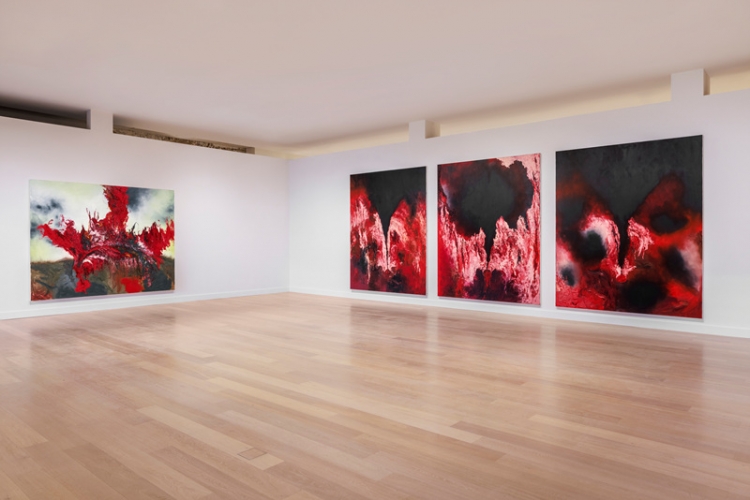
Earth Sky on Red Ground, a solo exhibition by internationally renowned contemporary artist Anish Kapoor was on view at the SCAD Museum of Art in Savannah, Georgia. Bringing together 15 paintings made between 2012 and 2022, the exhibition marks the first presentation at a U.S. museum to focus exclusively on Kapoor’s painting practice. The exhibition offered an in-depth look at the role painting has played within the artist’s broader oeuvre, best known for sculpture and large-scale installation.
For Kapoor, painting is not a distinct practice separate from sculpture, but rather another field that takes the shape of his long-standing sculptural exploration into matter and immateriality, presence and absence, and the interior and exterior of the body. The works in the exhibition were characterized by abstract forms that fill expansive canvases, thickly layered oil paint, and bold, gestural brushwork. Among the presented works, Combusted Self (2020), measuring approximately 2.4 by 3 meters, demonstrates Kapoor’s distinctive approach to painting, in which the materiality of densely built-up paint allows the medium to extend beyond the two-dimensional surface into a physical and spatial experience. These painterly explorations further reveal how Kapoor’s interest in the relationship between space, matter, the body, and perception—central to his sculptural and installation practices—continues to unfold through painting.
The exhibition proposed viewers to consider painting not as a peripheral aspect of Kapoor’s sculptural practice, but as a central medium that runs throughout his oeuvre. His enduring engagement with materials including mirrors, pigments, stone, and wax, through which he disrupts perception and probes the boundaries between the visible and the invisible, takes on a new form on canvas through color, the materiality of paint, abstract forms, and gesture. In doing so, Earth Sky on Red Ground reveals how Kapoor’s sculpture and painting, while distinct in medium, form a continuous and interconnected body of work.
For Kapoor, painting is not a distinct practice separate from sculpture, but rather another field that takes the shape of his long-standing sculptural exploration into matter and immateriality, presence and absence, and the interior and exterior of the body. The works in the exhibition were characterized by abstract forms that fill expansive canvases, thickly layered oil paint, and bold, gestural brushwork. Among the presented works, Combusted Self (2020), measuring approximately 2.4 by 3 meters, demonstrates Kapoor’s distinctive approach to painting, in which the materiality of densely built-up paint allows the medium to extend beyond the two-dimensional surface into a physical and spatial experience. These painterly explorations further reveal how Kapoor’s interest in the relationship between space, matter, the body, and perception—central to his sculptural and installation practices—continues to unfold through painting.
The exhibition proposed viewers to consider painting not as a peripheral aspect of Kapoor’s sculptural practice, but as a central medium that runs throughout his oeuvre. His enduring engagement with materials including mirrors, pigments, stone, and wax, through which he disrupts perception and probes the boundaries between the visible and the invisible, takes on a new form on canvas through color, the materiality of paint, abstract forms, and gesture. In doing so, Earth Sky on Red Ground reveals how Kapoor’s sculpture and painting, while distinct in medium, form a continuous and interconnected body of work.
October 2026
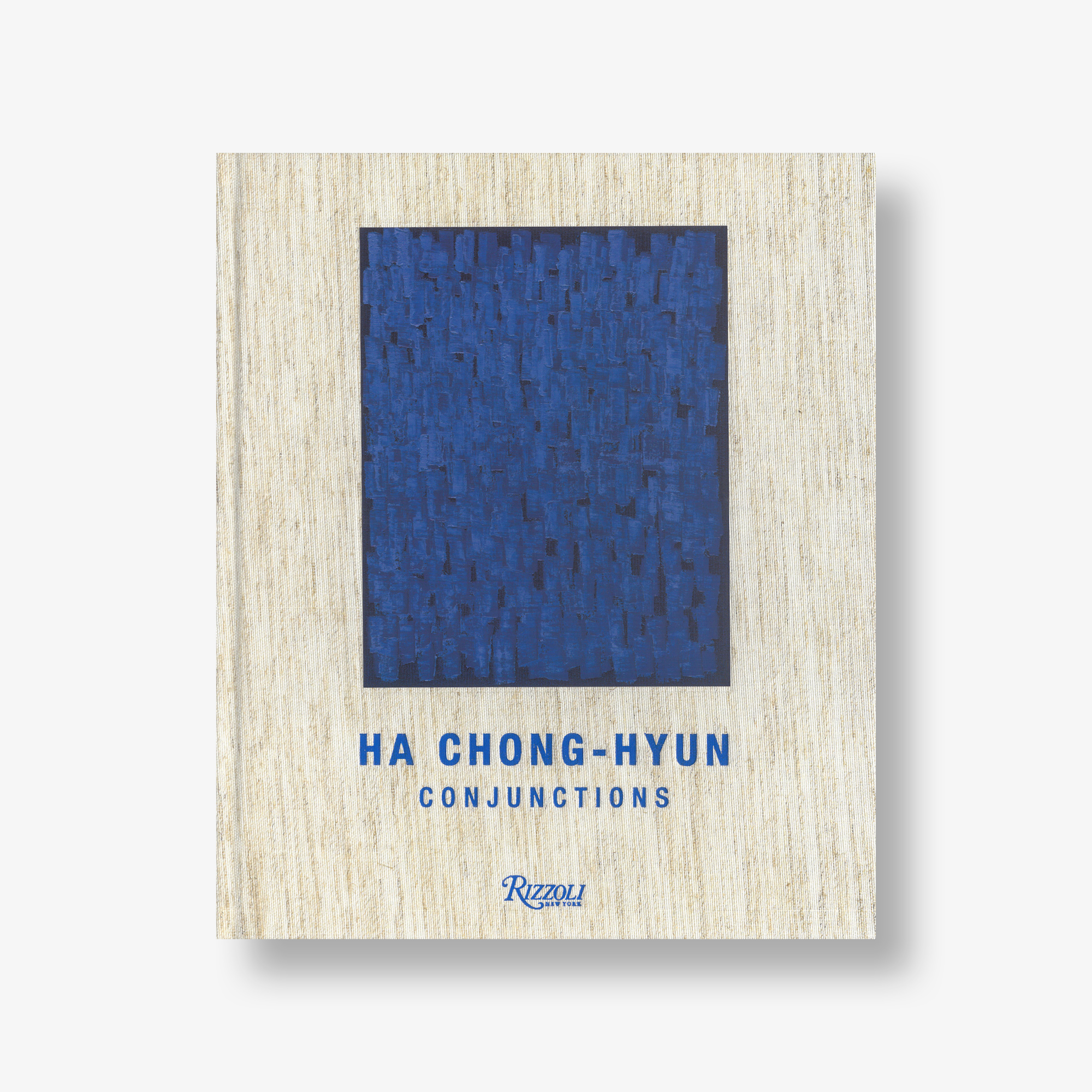
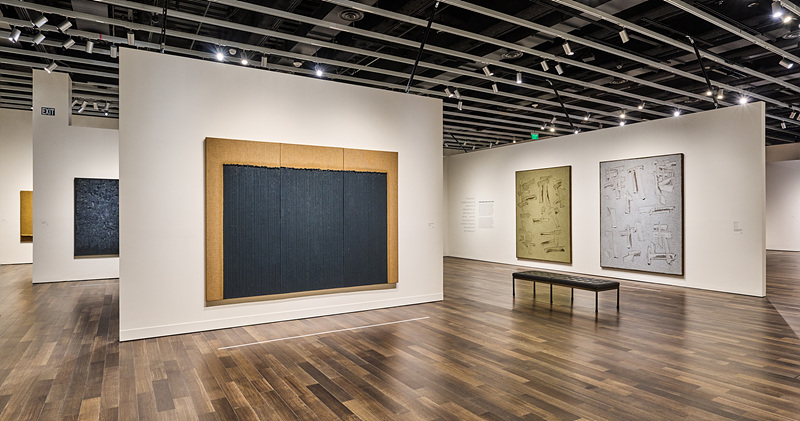
Ha Chong-Hyun’s First Major North American Exhibition, Ha Chong-Hyun: Retrospective Opens at the Asian Art Museum
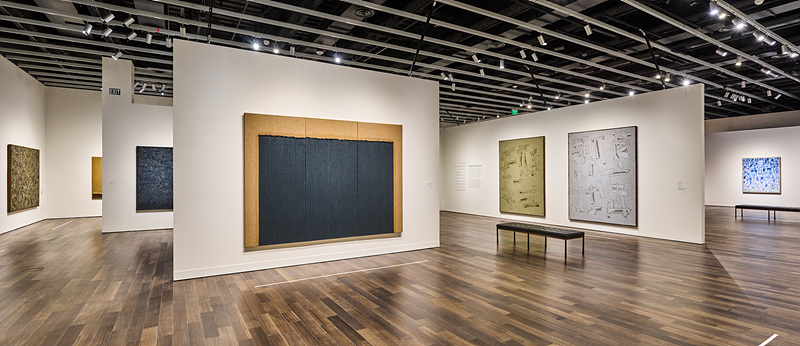
Ha Chong-Hyun: Retrospective at the Asian Art Museum in San Francisco marks the artist’s first major museum exhibition in North America, as well as a landmark showcase for a Korean contemporary artist in the region following Nam June Paik and Lee Ufan. The exhibition features 50 paintings, tracing Ha’s creative evolution over more than six decades. Though closely associated with Dansaekhwa, Ha Chong-Hyun’s body of work encompasses movements such as Informel, Geometric Abstraction, and the Korean Avant-Garde (AG). The exhibition includes new works made in 2025–2026, attesting to Ha’s ongoing artistic endeavor.
A leading institution presenting Asian and Asian diaspora artists, the Asian Art Museum is a fitting venue for this retrospective. The exhibition is co-organized by the museum and guest curator Sunjung Kim, Artistic Director of Art Sonje Center in Seoul. Kim defines Ha as an experimental artist who has pushed the limits of painting in the midst of South Korea’s turbulent modern history, defying classification as solely a Dansaekhwa painter. “Ha Chong-Hyun’s work reshapes how we understand abstraction—as a visceral experience, more than a purely visual language,” said Soyoung Lee, The Barbara Bass Bakar Director and CEO of the Asian Art Museum. “This exhibition reveals an artist who expanded the possibilities of painting and embodied the realities of his time and place.”
The retrospective also situates Ha’s practice within the broader history of global abstraction. Working in parallel with figures such as Donald Judd and Agnes Martin, he shares an interest in repetition and materiality, but his work diverges in its embrace of visible labor and imperfection. This distinctive approach is exemplified by Ha’s signature bae-ap-bub (背押法, “back pressure method”), through which he pushes paint from the back of the canvas through its open weave, bringing it to the surface. As the paint seeps through the coarse hemp fabric, the resulting surfaces embody an interplay between material and bodily action, reflecting his sustained exploration of painting’s materiality and process. Where Western Minimalism often sought industrial precision, Ha’s surfaces retain vulnerability—each mark a trace of effort and resistance. The exhibition serves as a reminder that the history of postwar abstraction is neither singular nor exclusively Western, but rather a constellation of multiple modernisms arising from distinct regions and historical conditions.
For Ha Chong-Hyun, the significance of this retrospective lies not so much in looking back as in affirming the present. “To hold a large-scale retrospective in one of America’s major cultural and artistic hubs at over ninety years old is an unexpected honor,” said Ha. “This exhibition is deeply meaningful to me because, rather than simply looking back on my legacy, it fully reflects my ongoing practice—traces of the work I am still sweating over in the studio today.” Ha Chong-Hyun: Retrospective is on view through January 25, 2027.
A leading institution presenting Asian and Asian diaspora artists, the Asian Art Museum is a fitting venue for this retrospective. The exhibition is co-organized by the museum and guest curator Sunjung Kim, Artistic Director of Art Sonje Center in Seoul. Kim defines Ha as an experimental artist who has pushed the limits of painting in the midst of South Korea’s turbulent modern history, defying classification as solely a Dansaekhwa painter. “Ha Chong-Hyun’s work reshapes how we understand abstraction—as a visceral experience, more than a purely visual language,” said Soyoung Lee, The Barbara Bass Bakar Director and CEO of the Asian Art Museum. “This exhibition reveals an artist who expanded the possibilities of painting and embodied the realities of his time and place.”
The retrospective also situates Ha’s practice within the broader history of global abstraction. Working in parallel with figures such as Donald Judd and Agnes Martin, he shares an interest in repetition and materiality, but his work diverges in its embrace of visible labor and imperfection. This distinctive approach is exemplified by Ha’s signature bae-ap-bub (背押法, “back pressure method”), through which he pushes paint from the back of the canvas through its open weave, bringing it to the surface. As the paint seeps through the coarse hemp fabric, the resulting surfaces embody an interplay between material and bodily action, reflecting his sustained exploration of painting’s materiality and process. Where Western Minimalism often sought industrial precision, Ha’s surfaces retain vulnerability—each mark a trace of effort and resistance. The exhibition serves as a reminder that the history of postwar abstraction is neither singular nor exclusively Western, but rather a constellation of multiple modernisms arising from distinct regions and historical conditions.
For Ha Chong-Hyun, the significance of this retrospective lies not so much in looking back as in affirming the present. “To hold a large-scale retrospective in one of America’s major cultural and artistic hubs at over ninety years old is an unexpected honor,” said Ha. “This exhibition is deeply meaningful to me because, rather than simply looking back on my legacy, it fully reflects my ongoing practice—traces of the work I am still sweating over in the studio today.” Ha Chong-Hyun: Retrospective is on view through January 25, 2027.
October 2026
Haegue Yang Presents Haegue Yang: Through, Her First Solo Exhibition at Dia Beacon, New York
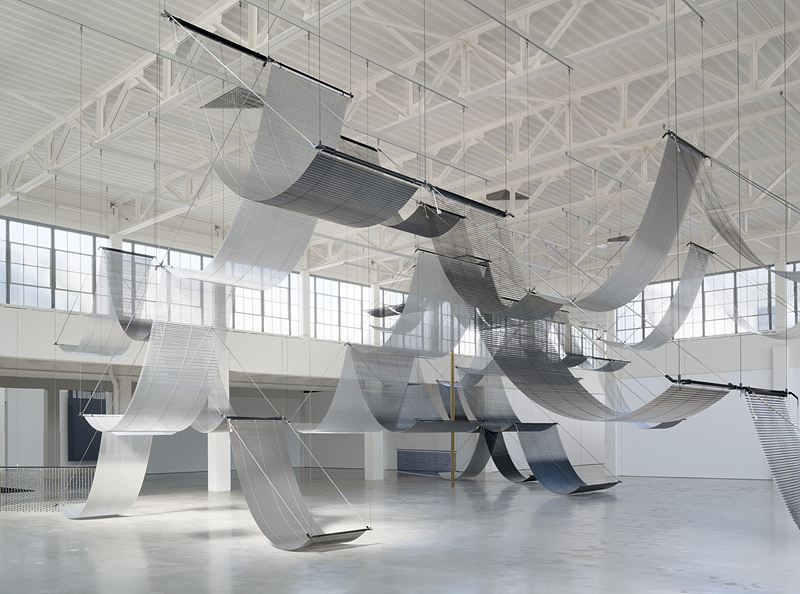
Haegue Yang presents her solo exhibition Haegue Yang: Through at Dia Beacon. Staged across the museum’s two levels, the exhibition is Yang’s first solo presentation with Dia Beacon and marks the first time an artist has conceived of a new body of work spanning the entirety of the building’s stacked architectural volumes. Since its founding in 1974, Dia Art Foundation has served as a “conduit” for artists to realize pioneering and ambitious projects that would otherwise be difficult to achieve due to limitations of scale or scope, as embodied in its very name that derived from the Greek word dia (διά), meaning “through.” Closely tied to the institution’s identity and mission, the exhibition presents four new commissions by Yang. In particular, Haegue Yang: Through will remain on view for approximately twenty months, unlike museum and gallery exhibitions that typically run for several months, welcoming visitors from around the world.
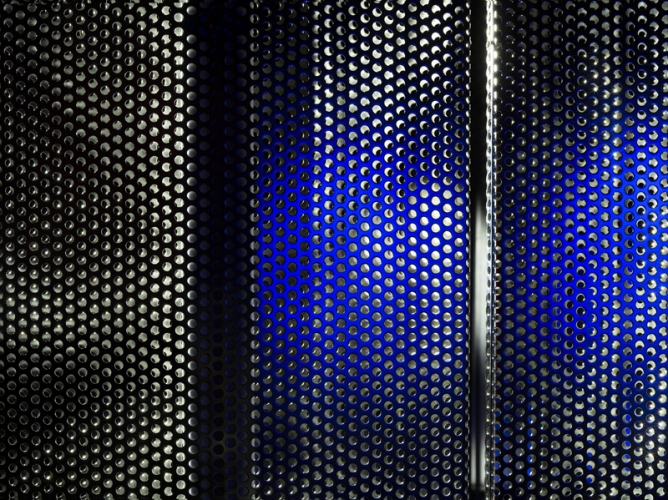
The exhibition attends to the museum’s seemingly opposing architectural conditions, taking as its starting point the architecture’s distinct dualities—natural and artificial light, the elevated and the subterranean—while treating them not as fixed oppositions, but as relational, oscillating processes or states of being. Yang applies the East Asian Five Phases theory, which holds that distinct principles and elements form a single whole through interconnected, cyclical relationships, to the placement and colors of her works, revealing within the structure of the exhibition the transformations that arise between them. Central to the exhibition is the late composer Isang Yun (1917–1995). His quartet Images (1968) assigns to its individual instruments the cardinal directions and colors associated with the Four Guardian Deities in the Goguryeo-period tomb mural of the Great Tomb of Gangseo from the late 6th to the early 7th century. Further intertwined into all four works of Yang, Yun’s musical piece serves as a key point of departure for the conceptual and spatial framework of the exhibition.
Working across a broad range of media and scales, from paper collage, video, and sound works to performance, sculpture, and large-scale installations, Yang juxtaposes the affective distinctions between industrial fabrication and folk craftsmanship as a methodology to complicate the notion of modernity. Jessica Morgan, Dia’s Nathalie de Gunzburg Director, comments as follows: “Dia has long invited artists to respond to the scale, light conditions, and material presence of its distinctive spaces. In Through, Yang extends this history while reframing it through her singular lens.” Marking the opening of the exhibition, the string ensemble Sejong Soloists performed a chamber concert of Yun’s Images in the lower-level gallery of Dia Beacon on October 10. The exhibition will be on long-term view through June 12, 2028.
The exhibition attends to the museum’s seemingly opposing architectural conditions, taking as its starting point the architecture’s distinct dualities—natural and artificial light, the elevated and the subterranean—while treating them not as fixed oppositions, but as relational, oscillating processes or states of being. Yang applies the East Asian Five Phases theory, which holds that distinct principles and elements form a single whole through interconnected, cyclical relationships, to the placement and colors of her works, revealing within the structure of the exhibition the transformations that arise between them. Central to the exhibition is the late composer Isang Yun (1917–1995). His quartet Images (1968) assigns to its individual instruments the cardinal directions and colors associated with the Four Guardian Deities in the Goguryeo-period tomb mural of the Great Tomb of Gangseo from the late 6th to the early 7th century. Further intertwined into all four works of Yang, Yun’s musical piece serves as a key point of departure for the conceptual and spatial framework of the exhibition.
Working across a broad range of media and scales, from paper collage, video, and sound works to performance, sculpture, and large-scale installations, Yang juxtaposes the affective distinctions between industrial fabrication and folk craftsmanship as a methodology to complicate the notion of modernity. Jessica Morgan, Dia’s Nathalie de Gunzburg Director, comments as follows: “Dia has long invited artists to respond to the scale, light conditions, and material presence of its distinctive spaces. In Through, Yang extends this history while reframing it through her singular lens.” Marking the opening of the exhibition, the string ensemble Sejong Soloists performed a chamber concert of Yun’s Images in the lower-level gallery of Dia Beacon on October 10. The exhibition will be on long-term view through June 12, 2028.
October 2026
Anish Kapoor Opens a Major Solo Exhibition Anish Kapoor at the Hayward Gallery, London, UK
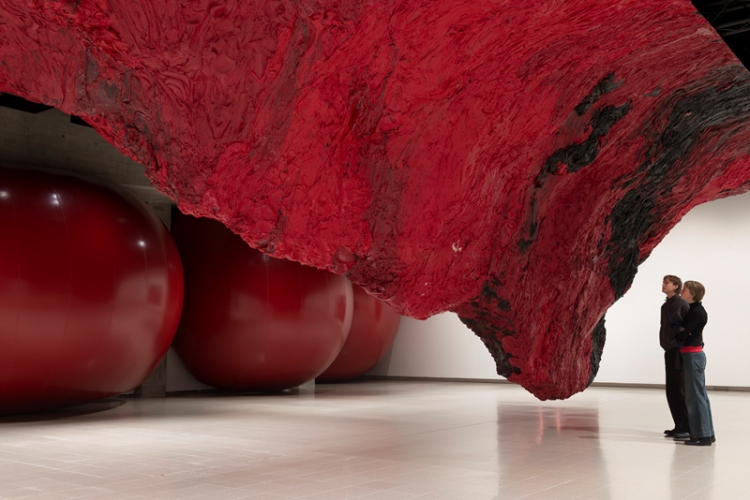
Anish Kapoor’s major solo exhibition Anish Kapoor is currently on view at the Hayward Gallery in London. Marking the 75th anniversary of Southbank Centre, the exhibition brings Kapoor back to the Hayward Gallery nearly three decades after his 1998 exhibition, which was the first time a British institution had staged such an extensive presentation of his practice. Gathering his early works alongside recent and newly commissioned works, the exhibition spans more than four decades of Kapoor’s practice and takes over the gallery’s entire indoor and outdoor spaces. Sculptures and paintings engage closely with the architecture, extending across walls, ceilings, and floors to create an immersive environment between the works and the spaces that contain them.
The exhibition opens with All of Nothing (2026), a monumental PVC sculpture measuring six meters in height. The work is the largest work ever presented at the Hayward Gallery and cannot be taken in from a single vantage point; instead, visitors are encouraged to move around its expansive form, which appears to push outward against the architecture, encountering it only in fragments. Its title, "All of Nothing," derives from the paradox of a seemingly monumental presence that is, in essence, an inflatable structure filled with air. The work thus encapsulates Kapoor’s sustained exploration of presence and absence, fullness and emptiness. In the interior galleries, Blinded by Eyes, Butchered by Birth (2014), also made from PVC, hangs upside down from the ceiling, overturning the conventional hierarchy of the exhibition space.
At the center of the exhibition, Mount Moriah at the Gate of the Ghetto (2022) descends inverted from the ceiling, creating a palpable sense of tension as its monumental form appears almost to touch the floor. The work evokes the sublime, a concept that has remained central to Kapoor’s practice throughout his career. Outside the gallery, the exhibition continues with the stainless steel sculpture Tsunami III (2025) and the new work Cloak (2026). Reflecting their surroundings like mirrors, these works disrupt the viewer’s perception and encourage the discovery of unfamiliar images within familiar landscapes.
Kapoor’s paintings and sculptures from the past decade are also showcased inside the gallery. Works incorporating Vantablack, a nanotechnology-based material that absorbs an extreme amount of light, create seemingly bottomless black spaces, blurring the boundaries between two-dimensional surfaces and three-dimensional forms. Alongside these are recent works made from materials including silicone, resin, and red pigments. Their intensely visceral materiality evokes the body and its internal organs, heightening the viewer’s instinctive physical response to the works.
Bringing together key works from Kapoor’s early career with recent and newly created works, the exhibition traces the evolution and expansion of Kapoor's investigation into materiality and immateriality, presence and absence, and interior and exterior over four decades of his practice. Monumental PVC structures, mirrored sculptures, unfathomably deep black surfaces, and visceral bodily forms each unsettle perception in different ways, redefining the relationship between the artwork, the space it inhabits, and the body of the viewer experiencing it. Returning to the Hayward Gallery after nearly 30 years, Kapoor highlights his artistic practice by demonstrating how sculpture can extend beyond the autonomous object to transform architecture, space, and the viewer’s perception itself.
The exhibition opens with All of Nothing (2026), a monumental PVC sculpture measuring six meters in height. The work is the largest work ever presented at the Hayward Gallery and cannot be taken in from a single vantage point; instead, visitors are encouraged to move around its expansive form, which appears to push outward against the architecture, encountering it only in fragments. Its title, "All of Nothing," derives from the paradox of a seemingly monumental presence that is, in essence, an inflatable structure filled with air. The work thus encapsulates Kapoor’s sustained exploration of presence and absence, fullness and emptiness. In the interior galleries, Blinded by Eyes, Butchered by Birth (2014), also made from PVC, hangs upside down from the ceiling, overturning the conventional hierarchy of the exhibition space.
At the center of the exhibition, Mount Moriah at the Gate of the Ghetto (2022) descends inverted from the ceiling, creating a palpable sense of tension as its monumental form appears almost to touch the floor. The work evokes the sublime, a concept that has remained central to Kapoor’s practice throughout his career. Outside the gallery, the exhibition continues with the stainless steel sculpture Tsunami III (2025) and the new work Cloak (2026). Reflecting their surroundings like mirrors, these works disrupt the viewer’s perception and encourage the discovery of unfamiliar images within familiar landscapes.
Kapoor’s paintings and sculptures from the past decade are also showcased inside the gallery. Works incorporating Vantablack, a nanotechnology-based material that absorbs an extreme amount of light, create seemingly bottomless black spaces, blurring the boundaries between two-dimensional surfaces and three-dimensional forms. Alongside these are recent works made from materials including silicone, resin, and red pigments. Their intensely visceral materiality evokes the body and its internal organs, heightening the viewer’s instinctive physical response to the works.
Bringing together key works from Kapoor’s early career with recent and newly created works, the exhibition traces the evolution and expansion of Kapoor's investigation into materiality and immateriality, presence and absence, and interior and exterior over four decades of his practice. Monumental PVC structures, mirrored sculptures, unfathomably deep black surfaces, and visceral bodily forms each unsettle perception in different ways, redefining the relationship between the artwork, the space it inhabits, and the body of the viewer experiencing it. Returning to the Hayward Gallery after nearly 30 years, Kapoor highlights his artistic practice by demonstrating how sculpture can extend beyond the autonomous object to transform architecture, space, and the viewer’s perception itself.
October 2026
Michael Joo’s Solo Exhibition Sweat Models 1991–2026 at Space ZeroOne, New York, USA
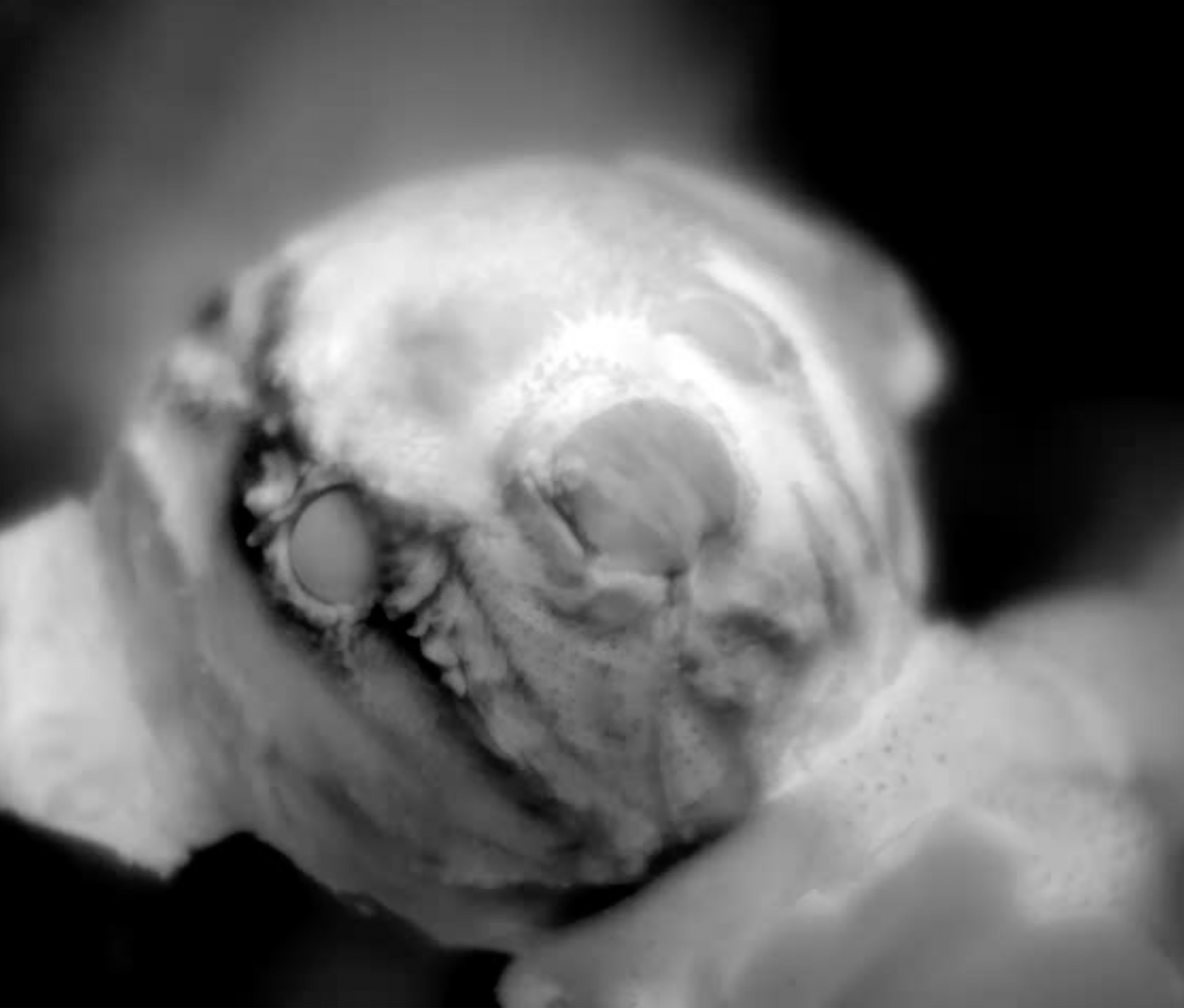
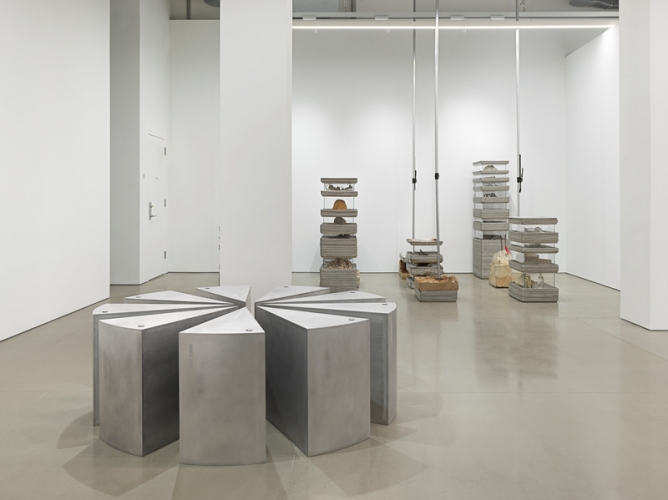
Michael Joo's solo exhibition Sweat Models 1991–2026 closed this past April at Space ZeroOne in Tribeca, New York. Centered on works from the 1990s that constitute the artist's early practice, the exhibition highlighted the context in which Joo formed a multidisciplinary practice drawing from technology, science, architecture, environmental studies, and other systems of knowledge.
Joo's early works, many of which had not been exhibited for many years or were realized for the first time in this exhibition, refer back to his undergraduate studies in biology. The works from this period attend to the social and technological aspects of creative spaces such as the laboratory and the kitchen. Joo sees these spaces as similar to the artist's studio: places where knowledge can be questioned, gained, and shared. His early works are built around modes of measurement and consumption to produce a sense of abstraction and distance through specific materials.
The works presented in the exhibition are closely tied to the social context of the 1990s, including the AIDS crisis and the mass adoption of information technology, and concern the human body and its vulnerabilities without explicitly depicting the body. Translating the knowledge systems of creative spaces such as the laboratory and the kitchen into a sculptural language, Joo persistently explores the fragility of the body and the artifice of identity construction through everyday and industrial materials such as synthetic sweat, urinal cakes, salt blocks, and bags of MSG. The principal works in the exhibition, including the large-scale installation Concatenations, presented anew more than three decades later, dismantle the contradictions of racial stigma and systems of classification, presenting the body and society as a multilayered state of "shimmer."
Joo's early works, many of which had not been exhibited for many years or were realized for the first time in this exhibition, refer back to his undergraduate studies in biology. The works from this period attend to the social and technological aspects of creative spaces such as the laboratory and the kitchen. Joo sees these spaces as similar to the artist's studio: places where knowledge can be questioned, gained, and shared. His early works are built around modes of measurement and consumption to produce a sense of abstraction and distance through specific materials.
The works presented in the exhibition are closely tied to the social context of the 1990s, including the AIDS crisis and the mass adoption of information technology, and concern the human body and its vulnerabilities without explicitly depicting the body. Translating the knowledge systems of creative spaces such as the laboratory and the kitchen into a sculptural language, Joo persistently explores the fragility of the body and the artifice of identity construction through everyday and industrial materials such as synthetic sweat, urinal cakes, salt blocks, and bags of MSG. The principal works in the exhibition, including the large-scale installation Concatenations, presented anew more than three decades later, dismantle the contradictions of racial stigma and systems of classification, presenting the body and society as a multilayered state of "shimmer."