

News
June 2026
Alexander Calder’s Major Retrospective Calder. Rêver en Équilibre at Fondation Louis Vuitton in Paris, France
Artist: 알렉산더 칼더 Alexander Calder (1898–1976)
Dates: April 15 – August 16, 2026
Venue: 프랑스 파리 루이 비통 재단 Fondation Louis Vuitton, Paris, France
Website: https://www.fondationlouisvuitton.fr/en/events/calder-rever-en-equilibre
Dates: April 15 – August 16, 2026
Venue: 프랑스 파리 루이 비통 재단 Fondation Louis Vuitton, Paris, France
Website: https://www.fondationlouisvuitton.fr/en/events/calder-rever-en-equilibre
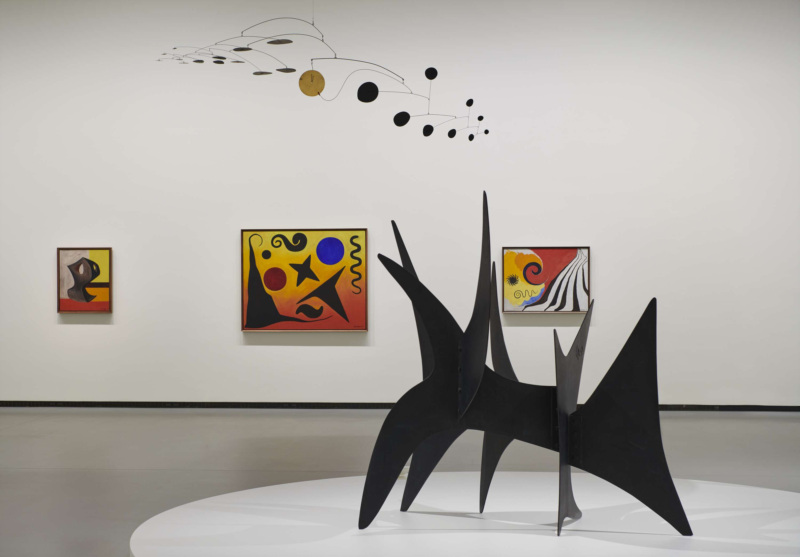
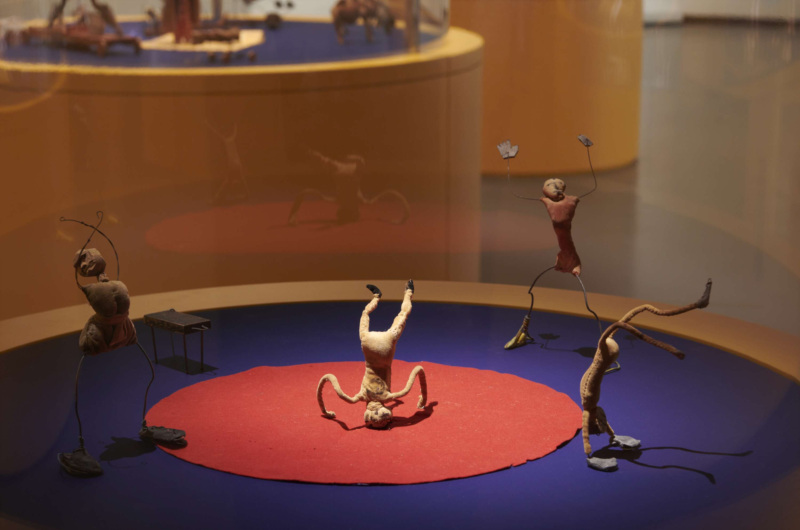
Alexander Calder’s major retrospective Calder. Rêver en Équilibre is on view at the Fondation Louis Vuitton in Paris. Celebrating the centenary of Calder’s arrival in France and fifty years since his passing, the exhibition spans half a century of creation, from the late 1920s and the first staging of the artist’s Cirque Calder (1926–31) performances that captivated the Parisian avant-garde, to the monumental sculptures that redefined public art in the 1960s and 1970s. Conceived in close collaboration with the Calder Foundation and featuring loans from international institutions and leading private collectors, the exhibition brings together nearly 300 works, including mobiles, stabiles, wire sculptures, paintings, drawings, and jewelry.
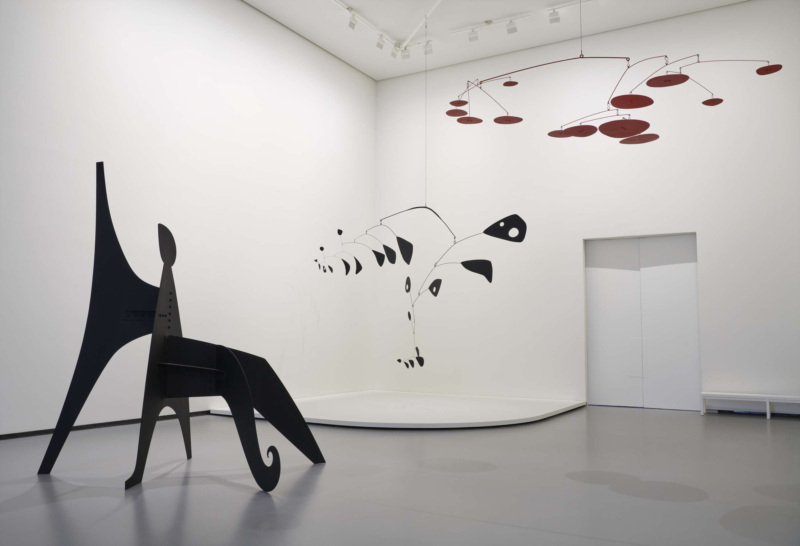
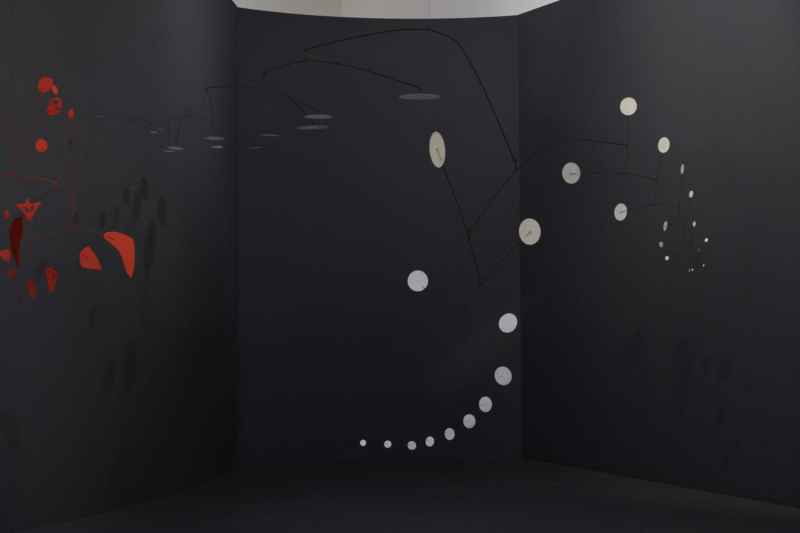
Presented as a chronological journey across more than 3,000 square meters, the exhibition highlights Calder’s fundamental artistic concerns, placing movement at the center, alongside light, reflection, gravity, sound, performance, and space. Calder’s mobiles, floating within Frank Gehry’s architecture, add an organic sense of movement and rhythm throughout the space while revealing a dynamic relationship between sculpture and architecture. Also on view is Cirque Calder, returning to Paris for the first time in fifteen years through an exceptional loan from the Whitney Museum of American Art, offering a rare opportunity to experience the work once seen by Le Corbusier, Jean Arp, Joan Miró, and Fernand Léger. The exhibition highlights how Calder expanded movement and temporality into essential elements of sculpture, showing how his experimental sculptural language reshaped the concept of modern sculpture.
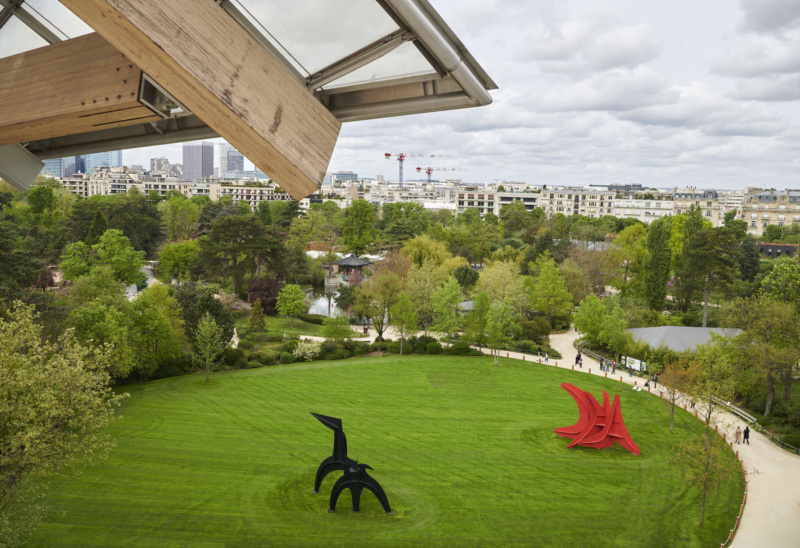
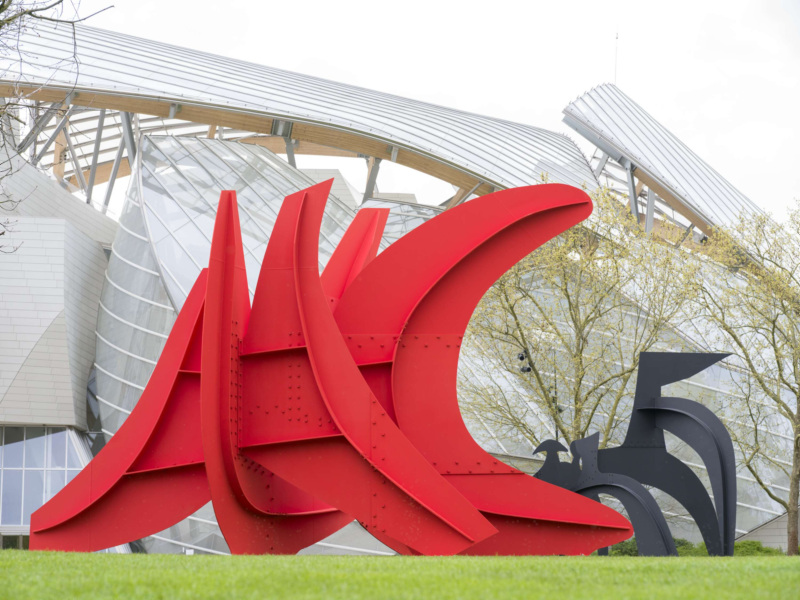
Calder’s visit to Piet Mondrian’s studio in 1930 marked a decisive shift toward abstraction, after which he expanded the definition of sculpture through his kinetic abstract compositions, known as “mobiles,” and his static sculptures, known as “stabiles.” Working between the United States and France, Calder developed works across a wide range of scales, from delicate metal constructions to monumental sculptures, opening new possibilities for modern sculpture. For this exhibition, the Fondation Louis Vuitton dedicates all of its exhibition spaces, and for the first time its adjoining lawn, to Calder’s work, proposing new spatial relationships between sculpture and architecture. The exhibition remains on view through August 16.
Presented as a chronological journey across more than 3,000 square meters, the exhibition highlights Calder’s fundamental artistic concerns, placing movement at the center, alongside light, reflection, gravity, sound, performance, and space. Calder’s mobiles, floating within Frank Gehry’s architecture, add an organic sense of movement and rhythm throughout the space while revealing a dynamic relationship between sculpture and architecture. Also on view is Cirque Calder, returning to Paris for the first time in fifteen years through an exceptional loan from the Whitney Museum of American Art, offering a rare opportunity to experience the work once seen by Le Corbusier, Jean Arp, Joan Miró, and Fernand Léger. The exhibition highlights how Calder expanded movement and temporality into essential elements of sculpture, showing how his experimental sculptural language reshaped the concept of modern sculpture.
Calder’s visit to Piet Mondrian’s studio in 1930 marked a decisive shift toward abstraction, after which he expanded the definition of sculpture through his kinetic abstract compositions, known as “mobiles,” and his static sculptures, known as “stabiles.” Working between the United States and France, Calder developed works across a wide range of scales, from delicate metal constructions to monumental sculptures, opening new possibilities for modern sculpture. For this exhibition, the Fondation Louis Vuitton dedicates all of its exhibition spaces, and for the first time its adjoining lawn, to Calder’s work, proposing new spatial relationships between sculpture and architecture. The exhibition remains on view through August 16.
알렉산더 칼더 회고전 《Calder. Rêver en Équilibre》, 파리 루이 비통 재단 미술관에서 개최
알렉산더 칼더의 대규모 회고전 《Calder. Rêver en Équilibre》가 프랑스 파리의 루이 비통 재단(Fondation Louis Vuitton)에서 개최되고 있다. 칼더의 도불 100주년과 작고 50주년을 기념하는 이번 전시는 1920년대 후반 파리 아방가르드를 매료시킨 〈Cirque Calder〉(1926–31) 공연의 초기 무대부터 1960–70년대 공공미술의 개념을 새롭게 정의한 대형 조각에 이르기까지 약 반세기에 걸친 창작 여정을 아우른다. 칼더 재단(Calder Foundation)을 포함한 주요 기관 및 개인 컬렉션의 대여작 약 300여 점을 비롯하여 모빌(mobile), 스태빌(stabile), 와이어 조각, 회화, 드로잉, 주얼리 등 다양한 작품군을 선보인다.
전시는 900여 평에 다다르는 공간에서 연대기적으로 구성되며, 칼더 작업세계의 핵심이라고 할 수 있는 움직임을 중심으로 빛, 반사, 중력, 소리, 퍼포먼스, 공간 등을 탐구한 작업들이 설치된다. 칼더의 모빌은 프랭크 게리의 건축 공간 전체에 유기적인 움직임과 리듬을 더하는 동시에 조각과 건축 사이의 역동적인 관계를 보여준다. 또한 휘트니 미술관(Whitney Museum of American Art)의 특별 대여로 15년 만에 파리로 돌아오는 〈Cirque Calder〉도 소개되어, 르 코르뷔지에, 장 아르프, 호안 미로, 페르낭 레제 등 당대를 풍미한 예술가들이 관람했던 그 작품을 경험하는 특별한 순간을 선사한다. 이렇듯 전시는 작가가 움직임과 시간성을 조각의 본질적인 요소로 확장한 과정을 집중적으로 조명하며, 그의 실험적 조형 언어가 현대 조각의 개념을 어떻게 변화시켰는지를 보여준다.
칼더는 1930년 피에트 몬드리안의 스튜디오에 방문한 것을 계기로 점차 추상 조각으로 나아갔으며, 이후 움직이는 추상 조각인 ‘모빌’과 정적인 조각인 ‘스태빌’을 통해 조각의 개념을 확장했다. 미국과 프랑스를 오가며 활동한 그는 섬세한 금속 구조물에서 대형 조각에 이르기까지 다양한 규모의 작업을 선보이면서 현대 조각의 새로운 가능성을 제시했다. 루이 비통 재단은 이번 전시를 위해 전시 공간 전체를 사용할 뿐만 아니라 최초로 야외 잔디 공간까지 작품에 내어주며, 조각과 건축이 만들어내는 새로운 공간적 관계를 제안한다. 전시는 8월 16일까지 이어진다.
[Source: Calder. Rêver en Équilibre press release, provided by Fondation Louis Vuitton]
전시는 900여 평에 다다르는 공간에서 연대기적으로 구성되며, 칼더 작업세계의 핵심이라고 할 수 있는 움직임을 중심으로 빛, 반사, 중력, 소리, 퍼포먼스, 공간 등을 탐구한 작업들이 설치된다. 칼더의 모빌은 프랭크 게리의 건축 공간 전체에 유기적인 움직임과 리듬을 더하는 동시에 조각과 건축 사이의 역동적인 관계를 보여준다. 또한 휘트니 미술관(Whitney Museum of American Art)의 특별 대여로 15년 만에 파리로 돌아오는 〈Cirque Calder〉도 소개되어, 르 코르뷔지에, 장 아르프, 호안 미로, 페르낭 레제 등 당대를 풍미한 예술가들이 관람했던 그 작품을 경험하는 특별한 순간을 선사한다. 이렇듯 전시는 작가가 움직임과 시간성을 조각의 본질적인 요소로 확장한 과정을 집중적으로 조명하며, 그의 실험적 조형 언어가 현대 조각의 개념을 어떻게 변화시켰는지를 보여준다.
칼더는 1930년 피에트 몬드리안의 스튜디오에 방문한 것을 계기로 점차 추상 조각으로 나아갔으며, 이후 움직이는 추상 조각인 ‘모빌’과 정적인 조각인 ‘스태빌’을 통해 조각의 개념을 확장했다. 미국과 프랑스를 오가며 활동한 그는 섬세한 금속 구조물에서 대형 조각에 이르기까지 다양한 규모의 작업을 선보이면서 현대 조각의 새로운 가능성을 제시했다. 루이 비통 재단은 이번 전시를 위해 전시 공간 전체를 사용할 뿐만 아니라 최초로 야외 잔디 공간까지 작품에 내어주며, 조각과 건축이 만들어내는 새로운 공간적 관계를 제안한다. 전시는 8월 16일까지 이어진다.
[Source: Calder. Rêver en Équilibre press release, provided by Fondation Louis Vuitton]
