

News
December 2025
Gala Porras-Kim, Subject of the solo exhibition The motion of an alluvial record at Kunsthalle Bern, Switzerland
Artist: 갈라 포라스-김(Gala Porras-Kim)
Dates: September 12 – November 9, 2025
Venue: 스위스 쿤스트할레 베른 Kunsthalle Bern, Switzerland
Website: https://kunsthallebern.ch/en/Exhibitions/2025-Gala-Porras-Kim-The-Motion-Of-An-Alluvial
Dates: September 12 – November 9, 2025
Venue: 스위스 쿤스트할레 베른 Kunsthalle Bern, Switzerland
Website: https://kunsthallebern.ch/en/Exhibitions/2025-Gala-Porras-Kim-The-Motion-Of-An-Alluvial
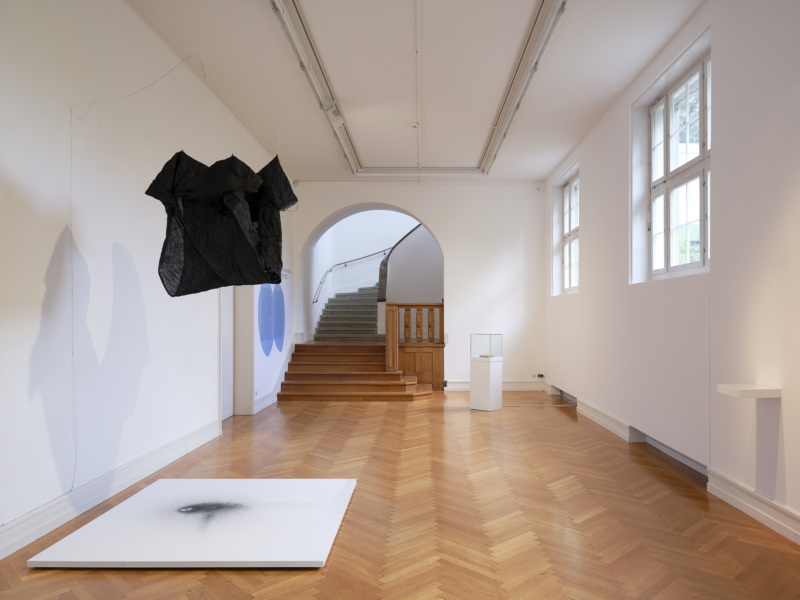
Gala Porras-Kim’s inaugural solo exhibition in Switzerland, The motion of an alluvial record, was recently on view at Kunsthalle Bern. Continuing her long-standing, institutionally critical practice, the artist examines how institutional frameworks define, legitimize, and preserve collections and cultural heritage, and reconceives art as a sensory medium that can be experienced physically, historically, and performatively within climate-controlled institutional environments.
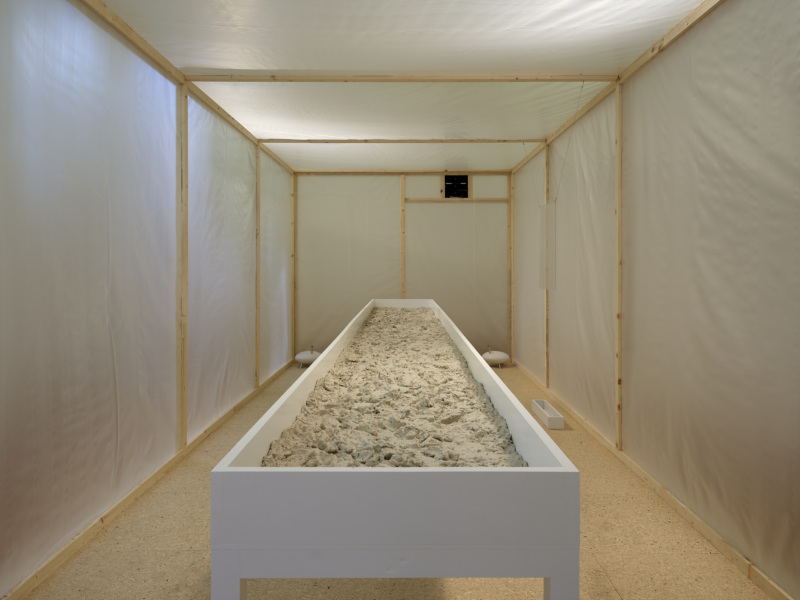
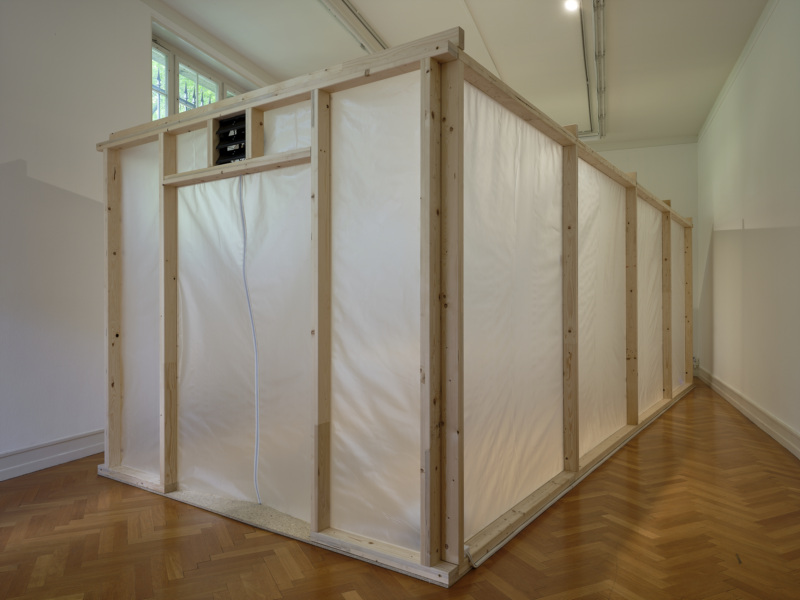
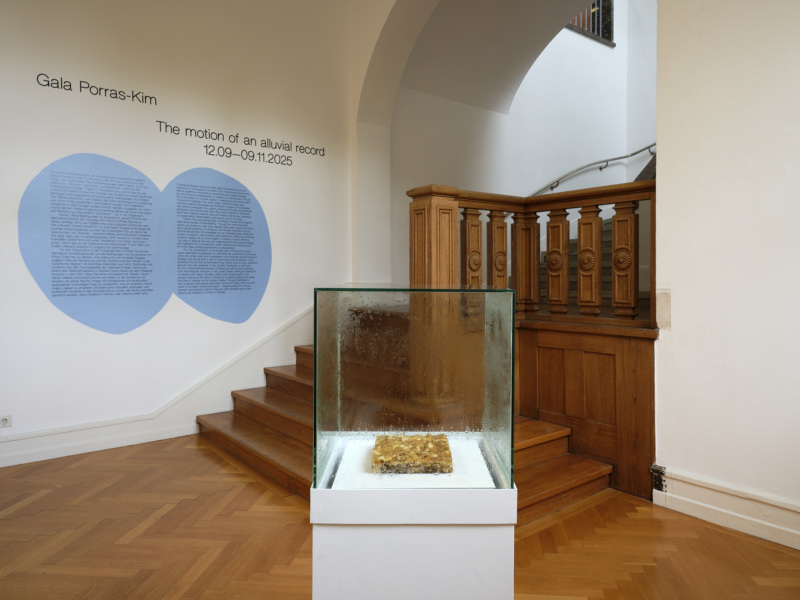
At the center of the exhibition was the installation The motion of an alluvial record, an “atmospheric pavilion” composed of living matter including clay, sediment, and silt collected from the wetlands of the Yucatán Peninsula, placed in conditions of high humidity and heat that reflect the Mayan concept of cyclical time. By artificially recreating a tropical climate within a freestanding wood-and-glass module, the work disrupts conventional museum climate concepts, which typically strive for a controlled, dry environment. Instead, it exposes how environmental control itself reshapes the meaning of objects. The installation also incorporated material traces embedded with institutional histories—such as ash from the fire at the National Museum of Brazil and dust gathered from the Peabody Museum in the United States—highlighting museums not as neutral repositories of knowledge, but as contested sites where multiple narratives intersect.
Through this exhibition, Porras-Kim investigates how the conditions of the white cube and institutional display and preservation logics often strip away cultural and political contexts. Viewing the object not as a static artifact but as living matter, the artist proposes alternative approaches to stewardship that foreground an object’s original functions and cultural presence. In doing so, the exhibition became a space to reconsider how museums construct memory and interpretation, suggesting more open-ended and expansive modes of engaging with cultural heritage.
At the center of the exhibition was the installation The motion of an alluvial record, an “atmospheric pavilion” composed of living matter including clay, sediment, and silt collected from the wetlands of the Yucatán Peninsula, placed in conditions of high humidity and heat that reflect the Mayan concept of cyclical time. By artificially recreating a tropical climate within a freestanding wood-and-glass module, the work disrupts conventional museum climate concepts, which typically strive for a controlled, dry environment. Instead, it exposes how environmental control itself reshapes the meaning of objects. The installation also incorporated material traces embedded with institutional histories—such as ash from the fire at the National Museum of Brazil and dust gathered from the Peabody Museum in the United States—highlighting museums not as neutral repositories of knowledge, but as contested sites where multiple narratives intersect.
Through this exhibition, Porras-Kim investigates how the conditions of the white cube and institutional display and preservation logics often strip away cultural and political contexts. Viewing the object not as a static artifact but as living matter, the artist proposes alternative approaches to stewardship that foreground an object’s original functions and cultural presence. In doing so, the exhibition became a space to reconsider how museums construct memory and interpretation, suggesting more open-ended and expansive modes of engaging with cultural heritage.
갈라 포라스-김, 스위스 쿤스트할레 베른에서 개인전 《The motion of an alluvial record》 개최
갈라 포라스-김의 스위스 내 첫 개인전 《The motion of an alluvial record》가 스위스 쿤스트할레 베른(Kunsthalle Bern)에서 막을 내렸다. 전시는 작가가 오랜 기간 이어온 제도 비판적인 작업 방식을 바탕으로 기관 내 공조 시스템으로 관리되는 전시 공간 속에서 유물 혹은 사물이 어떤 맥락으로 규정되는지를 탐구하고, 예술을 신체적 · 역사적 · 퍼포먼스적으로 경험할 수 있는 감각적 매체로 재구성했다.
이번 전시의 핵심 설치작인 〈The motion of an alluvial record〉는 유카탄 반도 습지에서 채집한 점토, 퇴적물, 실트(silt) 등 ‘살아 있는 물질’을 고습·고열 환경에 두어 고대 마야인의 순환적 시간관을 드러낸 ‘대기적 파빌리온(atmospheric pavilion)’이다. 고습도의 아열대 기후를 인공적으로 재현한 이 설치작은 작품의 보존을 위해 습기를 철저히 통제하는 박물관의 제도적 관행을 비틀고, 전시 환경 자체가 작품의 의미를 어떻게 재구성하는지 적극적으로 드러낸다. 또한 브라질 국립박물관 화재 잔해, 미국 피바디 박물관의 먼지 등 제도적 역사가 담긴 요소들을 함께 배치해, 박물관이 중립적인 지식 저장소가 아니라 다양한 서사와 이해가 교차하는 장소임을 강조한다.
작가는 이번 전시를 통해 미술관 혹은 박물관의 화이트 큐브에 내재한 조건, 전시 방식, 보존의 논리가 문화적·정치적 맥락을 어떻게 배제하는지 비판적으로 추적한다. 작가는 오브제를 정지된 유물이 아닌 살아 있는 존재로 바라보며, 그 본래의 기능과 문화적 존재감을 회복하는 대안적 보존·전시 방식을 제안한다. 이를 통해 박물관 제도가 구성해온 기억과 해석의 틀에 균열을 내고, 보다 개방적인 문화유산 접근 방식의 가능성을 모색한다.
[Source: Kunstalle Bern website]
이번 전시의 핵심 설치작인 〈The motion of an alluvial record〉는 유카탄 반도 습지에서 채집한 점토, 퇴적물, 실트(silt) 등 ‘살아 있는 물질’을 고습·고열 환경에 두어 고대 마야인의 순환적 시간관을 드러낸 ‘대기적 파빌리온(atmospheric pavilion)’이다. 고습도의 아열대 기후를 인공적으로 재현한 이 설치작은 작품의 보존을 위해 습기를 철저히 통제하는 박물관의 제도적 관행을 비틀고, 전시 환경 자체가 작품의 의미를 어떻게 재구성하는지 적극적으로 드러낸다. 또한 브라질 국립박물관 화재 잔해, 미국 피바디 박물관의 먼지 등 제도적 역사가 담긴 요소들을 함께 배치해, 박물관이 중립적인 지식 저장소가 아니라 다양한 서사와 이해가 교차하는 장소임을 강조한다.
작가는 이번 전시를 통해 미술관 혹은 박물관의 화이트 큐브에 내재한 조건, 전시 방식, 보존의 논리가 문화적·정치적 맥락을 어떻게 배제하는지 비판적으로 추적한다. 작가는 오브제를 정지된 유물이 아닌 살아 있는 존재로 바라보며, 그 본래의 기능과 문화적 존재감을 회복하는 대안적 보존·전시 방식을 제안한다. 이를 통해 박물관 제도가 구성해온 기억과 해석의 틀에 균열을 내고, 보다 개방적인 문화유산 접근 방식의 가능성을 모색한다.
[Source: Kunstalle Bern website]
