

News
November 2026
Jenny Holzer’s J’AI VU Transforms the Musée d’Orsay in Paris with Texts from the Museum’s Archive
Artist: 제니 홀저(Jenny Holzer, b. 1950)
Dates: October 20, 2026 – February 21, 2027
Venue: 프랑스 파리 오르세 미술관(Musée d’Orsay, Paris, France)
Website: https://www.musee-orsay.fr/en/program/whats-on/exhibitions/jenny-holzer-jai-vu
Dates: October 20, 2026 – February 21, 2027
Venue: 프랑스 파리 오르세 미술관(Musée d’Orsay, Paris, France)
Website: https://www.musee-orsay.fr/en/program/whats-on/exhibitions/jenny-holzer-jai-vu
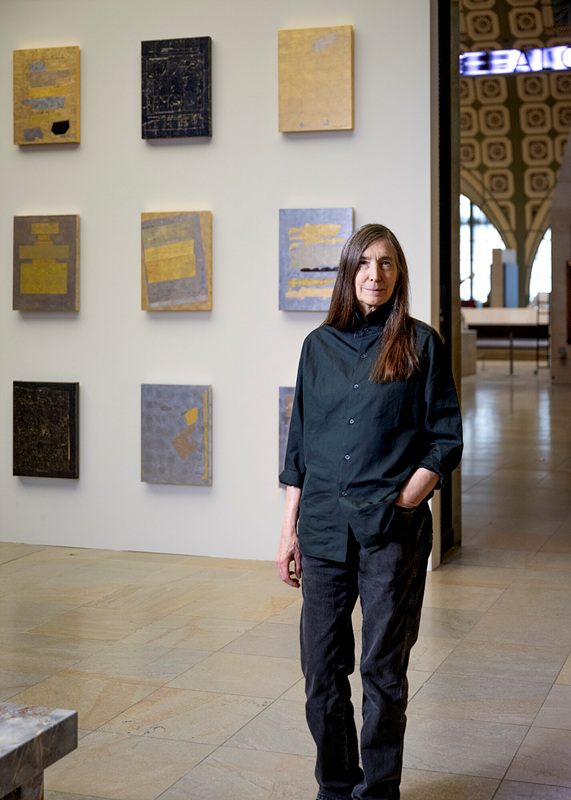
Jenny Holzer’s major solo exhibition, J’AI VU, is currently on view at the Musée d’Orsay in Paris. This exhibition brings together the museum’s major historic collection from the 19th century and the architectural elements with Holzer’s text-based works, inviting viewers to find the familiar artworks anew. Drawing on more than 750 texts excerpted from the museum’s archive and the texts from the historical period covered by its collection, Holzer rearranges and presents them in various media including LEDs, stoneworks, and paintings. The exhibition boasts the most extensive collection of texts Holzer has brought together for an exhibition to date.
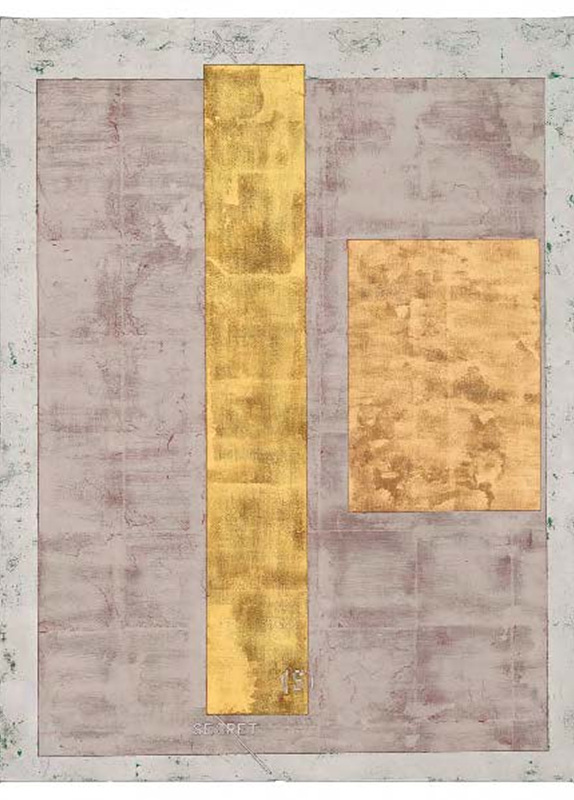
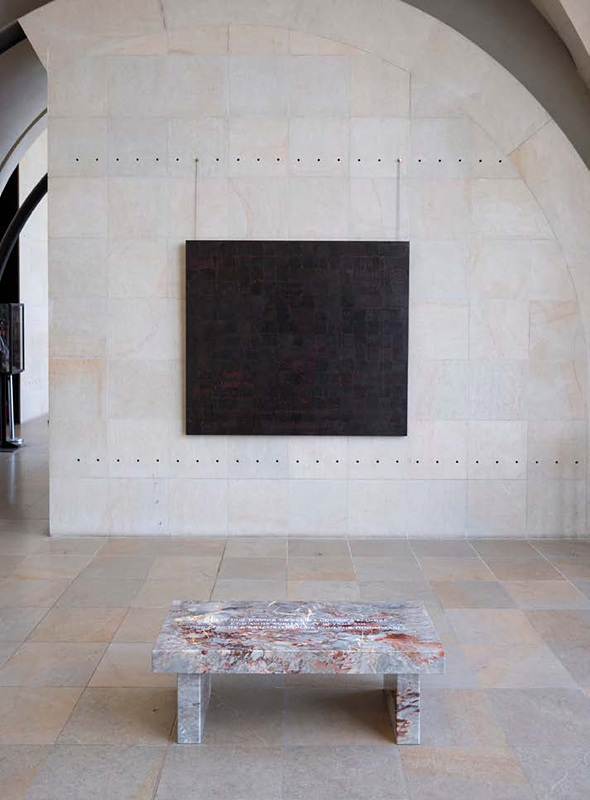
For the exhibition, Jenny Holzer has rearranged the museum’s history painting room to highlight the theme of war and conflict. Presented alongside war-related works from the collection, Holzer’s Redaction Paintings address the critical issues that have shaped international news in recent years, connecting the problem of violence and power across time. The exhibition includes thirty-four metallic paintings that incorporate declassified documents and other archival texts, where heavily redacted content exposes the paradox of transparency and secrecy of information.
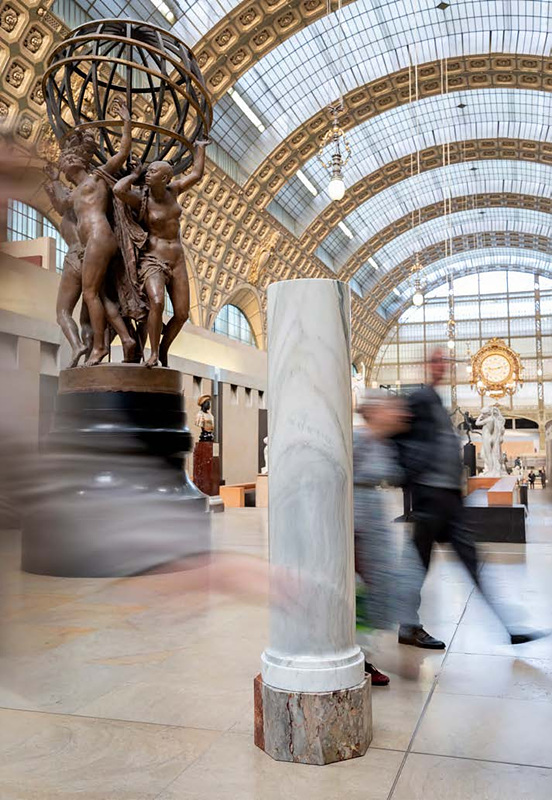
The seventeen stone benches and two columns placed throughout the museum were created by Holzer for this exhibition, taking the museum’s architecture and its permanent collection into account. Most are engraved with texts from the period covered by the museum’s collection between 1848 and 1914, including excerpts from letters and documents by artists such as Claude Monet and Mary Cassatt. The works and accompanying texts invite viewers both to appreciate the artwork and to immerse themselves in the history represented in the Musée d’Orsay’s collection.
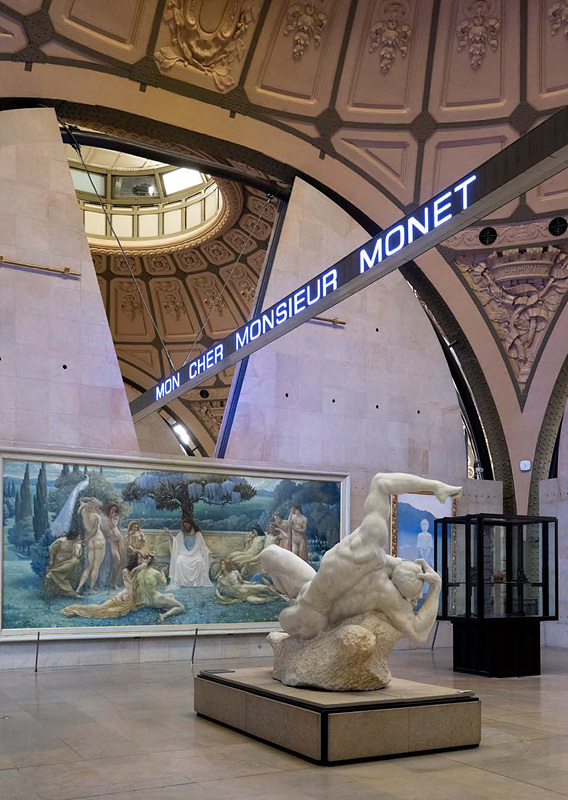
The LED works extending through four galleries—those dedicated to history painting, naturalism, and symbolism, as well as the Courbet room on the floor below—offer a captivating experience. Animated with colorful streams of text, ÉCRIT (2026) echoes the building’s conversion from a nineteenth-century railway station to a modern museum. The movement of the text reflects the flow of visitors through the station and the galleries, a nod to the building’s past and present. Holzer’s language goes beyond mere commentary on the existing collection, guiding visitors to experience the museum’s history and architecture anew.
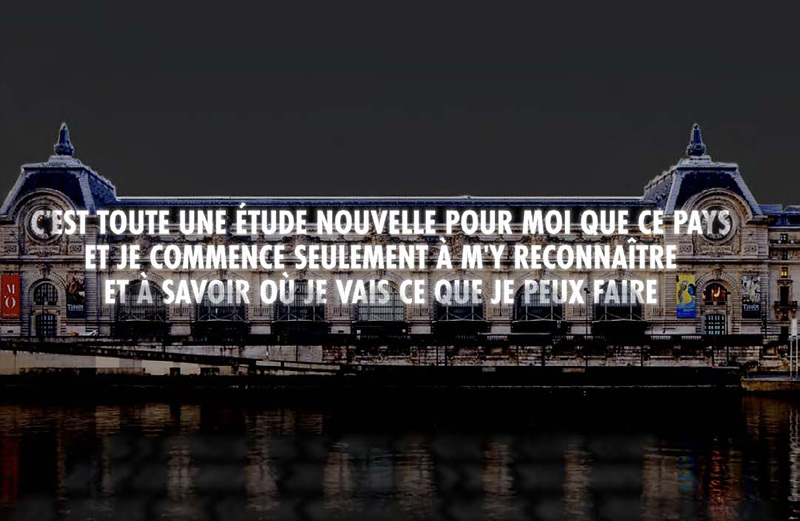
In addition, during the opening week of the exhibition and in conjunction with Paris Art Week 2026, Holzer presented light projections titled ÉCLAIRÉ onto the façade of the Musée d’Orsay. Overlooking the Seine River, Holzer’s site-specific light projections illuminated the architecture with textual excerpts drawn from letters of contemporaneous artists such as Claude Monet and Vincent van Gogh, as well as literary and political commentary. Rising slowly into the night sky, projections offered passersby an immersive experience akin to stepping out of time. Holzer has presented similar projections at major landmarks around the world, including the Louvre Pyramid in Paris, Solomon R. Guggenheim Museum, and Rockefeller Center in New York. Using architecture and natural landscapes as monumental canvases, the artist extends language into public spaces beyond the museum, exploring new ways to engage viewers within the fabric of daily urban life.
The breadth of her approach has resulted in a remarkably diverse assortment of writings from the late nineteenth and early twentieth centuries, revolving around themes such as the Franco-Prussian War of 1870–71; the 1871 Paris Commune; colonialism; activism; anarchism; the world of labor and workers’ strikes; the military, especially conscription, hazing, and corruption; Baron Haussmann and living conditions in Paris; art criticism; and artists’ correspondence. This plurality of voices takes on particular resonance when projected at monumental scale onto the museum’s façade, carved into marble and granite, or propelled through space as a stream of light. The exhibition runs through February 21, 2027. Holzer will also present a solo exhibition at Kukje Gallery’s Hanok space on November 19, 2026.
제니 홀저, 파리 오르세 미술관의 소장품과 아카이브를 해석한 대규모 개인전 《J’AI VU》 개최
제니 홀저(Jenny Holzer)의 대규모 개인전 《J’AI VU》가 파리 오르세 미술관에서 개최 중이다. 이번 전시는 19세기 미술을 대표하는 오르세 미술관의 소장품과 전시 공간에 홀저의 언어 작업을 결합해, 익숙한 작품을 새로운 시각으로 바라보도록 제안한다. 작가는 미술관의 아카이브와 소장품이 다루는 시대의 역사적 문헌에서 발췌한 750개 이상의 텍스트를 LED 설치, 석재 조각, 회화 등 다양한 매체로 재구성해 당시의 사회와 역사를 오늘날의 관점에서 되돌아보게 한다. 이번 전시는 지금까지 작가가 선보인 전시 가운데 가장 광범위한 텍스트 컬렉션을 선보인다.
이번 전시에서 제니 홀저는 전쟁과 갈등이라는 주제에 초점을 맞춰 오르세 미술관의 역사화 전시실을 새롭게 구성했다. 미술관 소장품 가운데 전쟁을 다룬 작품들과 함께 최근의 국제 분쟁을 다룬 홀저의 ‘검열 회화’를 선보여 시대별 폭력과 권력의 문제를 연결한다. 전시에는 기밀 해제된 정부 문서 및 기타 아카이브 텍스트를 포함한 회화 34점이 포함된다. 금속박을 입힌 화면은 문서의 상당 부분이 가려져 있어, 정보의 공개와 은폐를 둘러싼 모순을 드러낸다.
미술관 곳곳에 놓인 석재 벤치 17개와 기둥 조각 2점도 오르세 미술관의 건축과 소장품을 고려해 특별히 제작한 작품이다. 홀저는 미술관의 조각 받침대에서 형태적 영감을 얻고, 기존 조각과 좌대에 사용된 석재의 종류와 색채를 세밀하게 조사해 작품의 재료를 선정했다. 벤치와 기둥에는 미술관 소장품의 시대적 배경인 1848년부터 1914년 사이의 기록과 클로드 모네와 메리 카사트를 비롯한 당대 예술가들의 편지와 문헌에서 가져온 문장들이 새겨져 있다. 관람객은 작품을 감상하면서 그 곁에 놓인 글을 읽음으로써 작품이 제작된 시대의 감정과 생각을 한층 가까이 접할 수 있다.
역사화, 자연주의, 상징주의 전시실과 아래층의 귀스타브 쿠르베 전시실에 이르는 4개 공간에 걸쳐 설치된 LED 작품은 관람객에게 강렬한 몰입 경험을 제공한다. 다채로운 색의 문장들이 공간을 따라 끊임없이 흐르는 LED 설치 〈ÉCRIT〉(2026)은 19세기 기차역에서 현대미술관으로 변모한 오르세의 건축적 역사와 연결된다. 글이 흐르는 움직임은 과거 기차역을 오가던 사람들의 이동을 떠올리게 하며, 오늘날 관람객이 전시실 사이를 이동하는 경험과 겹쳐진다. 홀저의 언어는 기존 소장품을 설명하는 데 머무르지 않고, 미술관의 역사와 공간을 새롭게 경험하도록 이끈다.
더불어 제니 홀저는 전시 개막 주간이자 2026 파리 아트 위크 기간에 맞춰 오르세 미술관 외벽에 〈ÉCLAIRÉ〉라는 제목의 야간 라이트 프로젝션을 선보였다. 센강을 내려다보는 미술관 외벽에는 클로드 모네와 빈센트 반 고흐 등 예술가들의 편지와 당대의 문학·정치적 기록에서 가져온 문장들이 빛으로 투사됐다. 라이트 프로젝션은 밤하늘로 천천히 떠오르는 듯한 글귀를 통해 건축물을 밝히며, 지나가는 이들에게 마치 시간을 벗어난 듯한 경험을 선사했다. 제니 홀저는 파리 루브르 피라미드, 뉴욕 구겐하임 미술관, 록펠러 센터를 비롯한 전 세계의 주요 랜드마크에서 이와 같은 프로젝션 작품을 선보여 왔다. 작가는 건축물과 자연경관을 거대한 화면으로 활용해 언어를 미술관 밖의 공공 공간으로 확장하고, 도시의 일상 속에서 관객과 만나는 새로운 방식을 모색해 왔다.
작가의 폭넓은 시선은 19세기 말과 20세기 초까지의 다양한 기록을 한데 모으는 작업으로 이어진다. 이 기록들은 프로이센-프랑스 전쟁과 파리 코뮌, 식민주의와 행동주의, 아나키즘, 노동 현장과 파업, 군대의 부조리(징병제, 폭력, 부패), 오스만의 도시 계획과 파리의 주거 환경, 나아가 미술 비평과 예술가들의 서신까지 다양한 층위를 아우른다. 이처럼 소환된 시대의 다채로운 목소리는 미술관 외벽에 대형 프로젝션으로 투사되거나 대리석과 화강암에 새겨지고, 혹은 공간을 가로지르는 빛의 흐름으로 치환되며 특별한 시각적·공간적 울림을 자아낸다. 전시는 2027년 2월 21일까지 이어진다. 한편 제니 홀저는 11월 19일 국제갤러리 한옥에서 개인전을 앞두고 있다.
[Source: Musée d’Orsay press materials]
