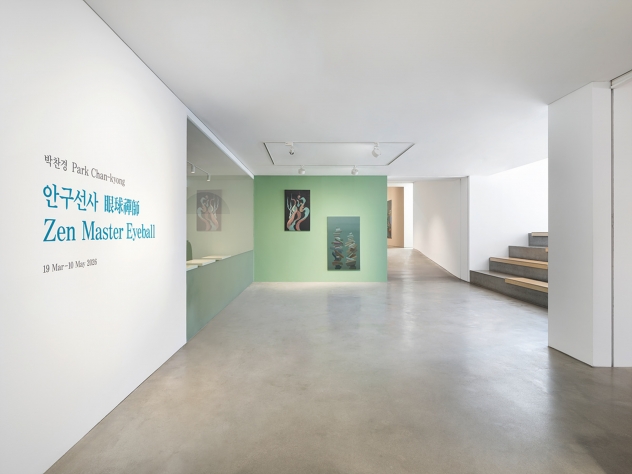
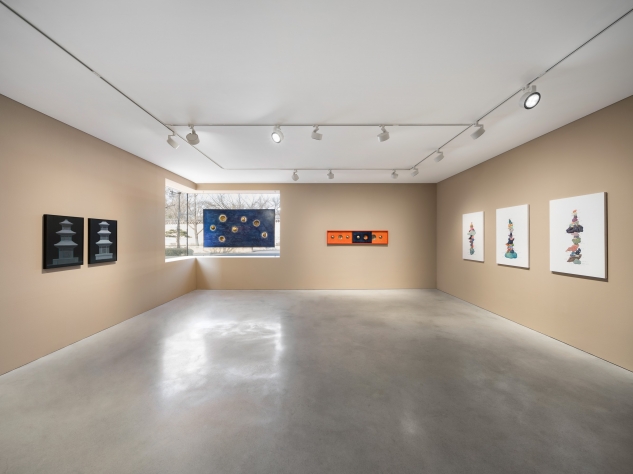
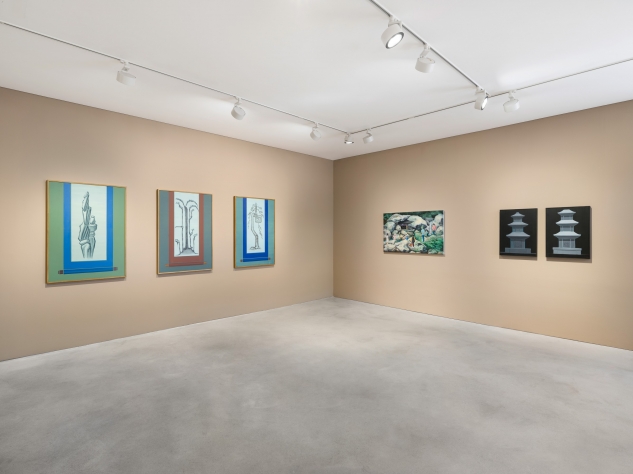
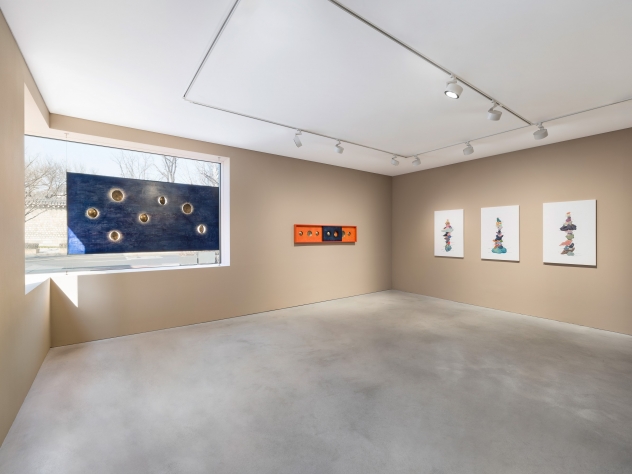
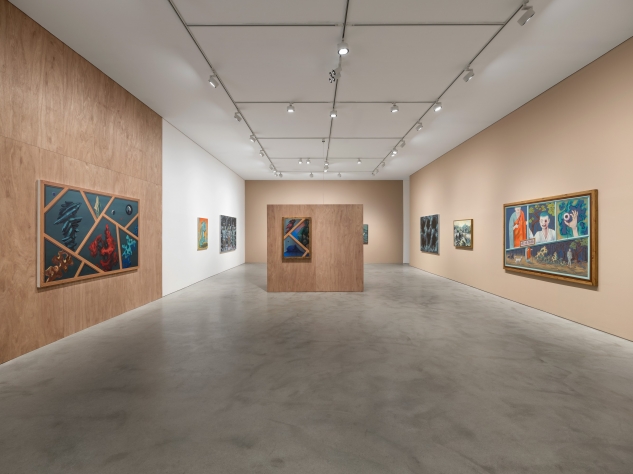
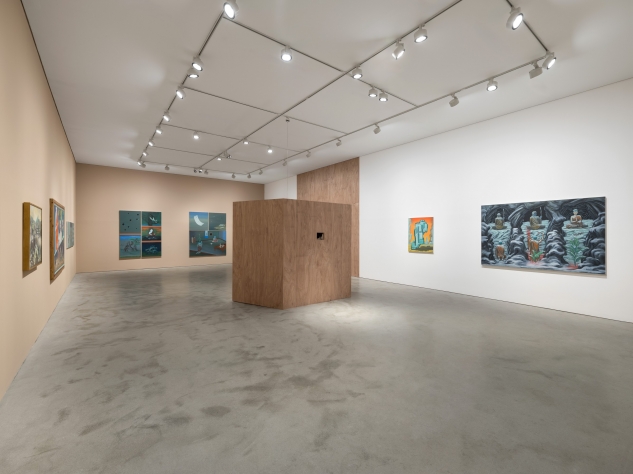
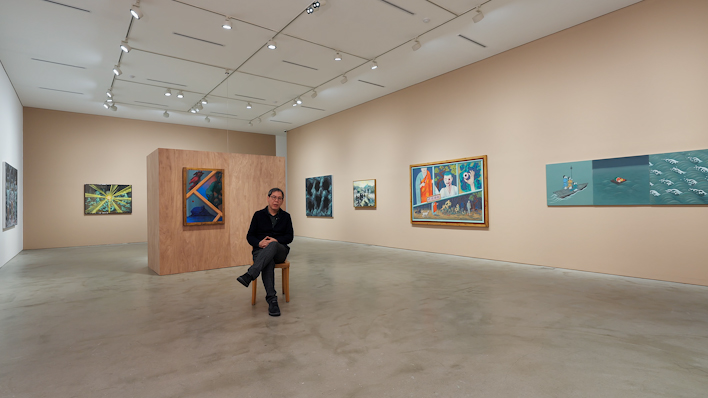
Kukje Gallery is pleased to present Park Chan-kyong’s solo exhibition Zen Master Eyeball, on view at K1 and featuring 24 recent paintings. Over the past three decades, Park has explored the modernity of Korea and East Asia through themes of national division, the Cold War, tradition, and folk belief. Rather than treating tradition as a choice between repression and celebration, or rupture and continuity, Park sees it as something that repeatedly resurfaces through modernization and Westernization—as symptoms, questions, energies, and resources.
In this exhibition, Park draws upon temple murals and Joseon-dynasty folk paintings, reinterpreting vernacular aesthetics to foreground elements of the grotesque, the sublime, fantasy, and humor. By interweaving and exaggerating the visual languages of Buddhist hanging scrolls (taenghwa), folk paintings, and even comics, he seeks not to preserve tradition as a fixed notion of “cultural heritage,” but, in his words, to “awaken those concepts and images of tradition that have been dozing off.”
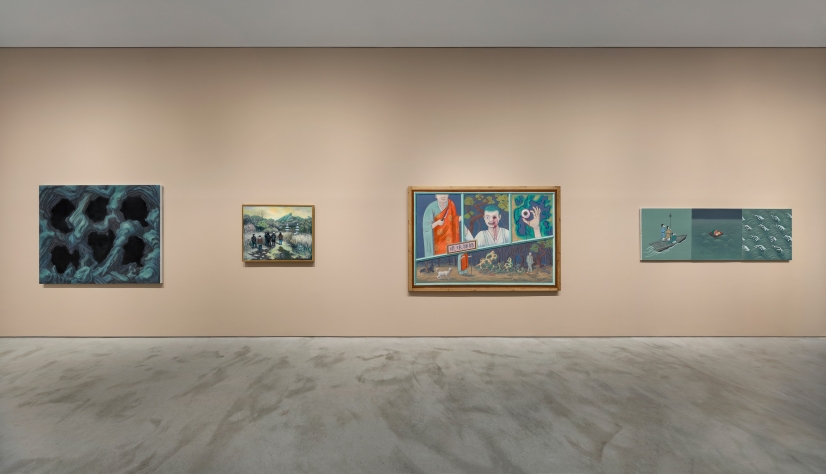
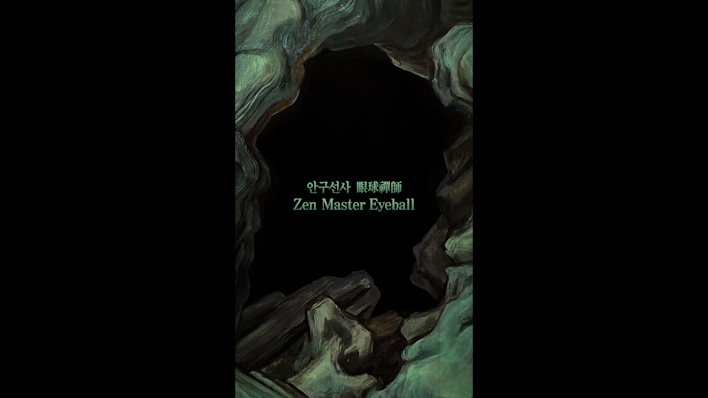
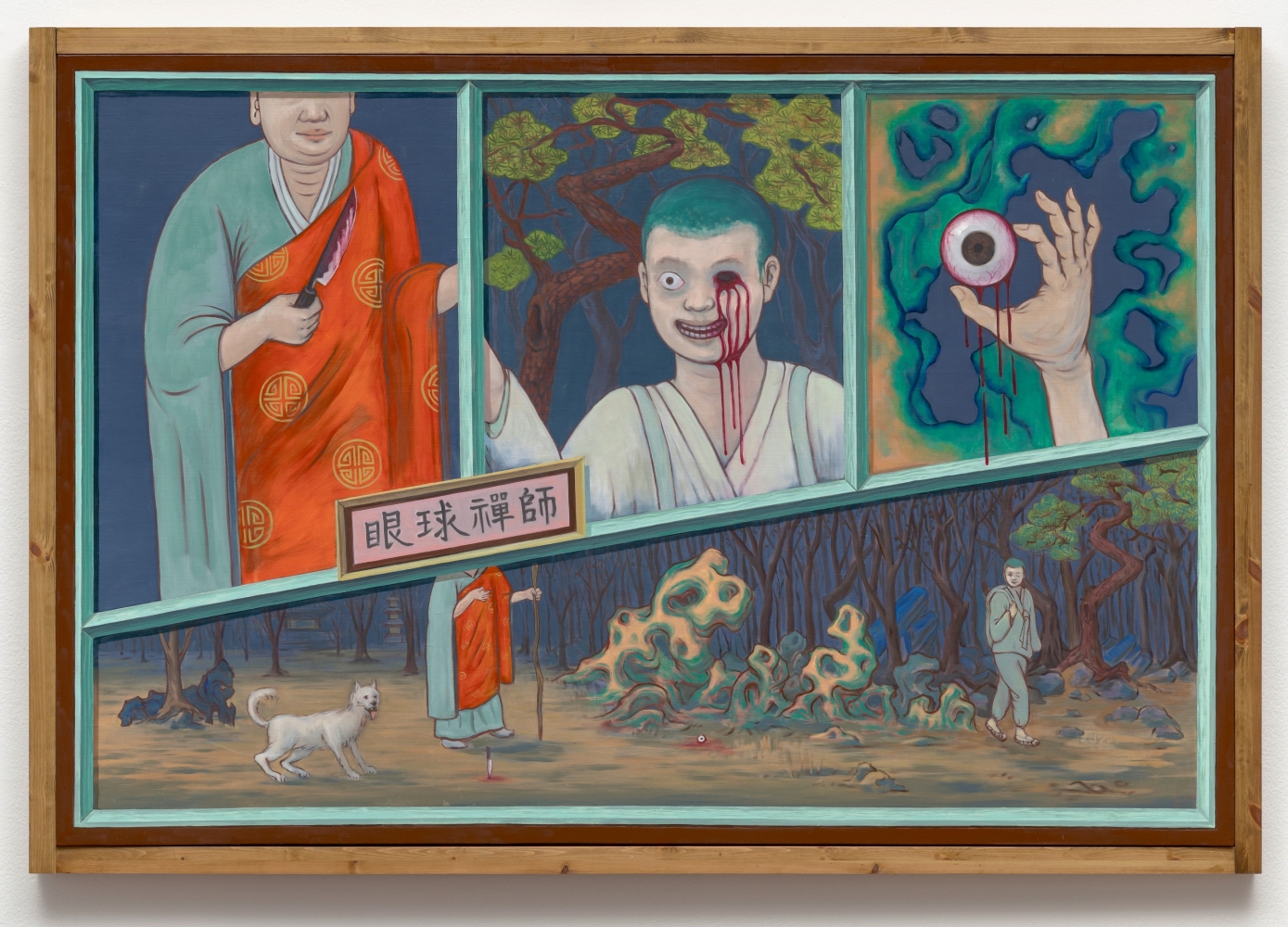
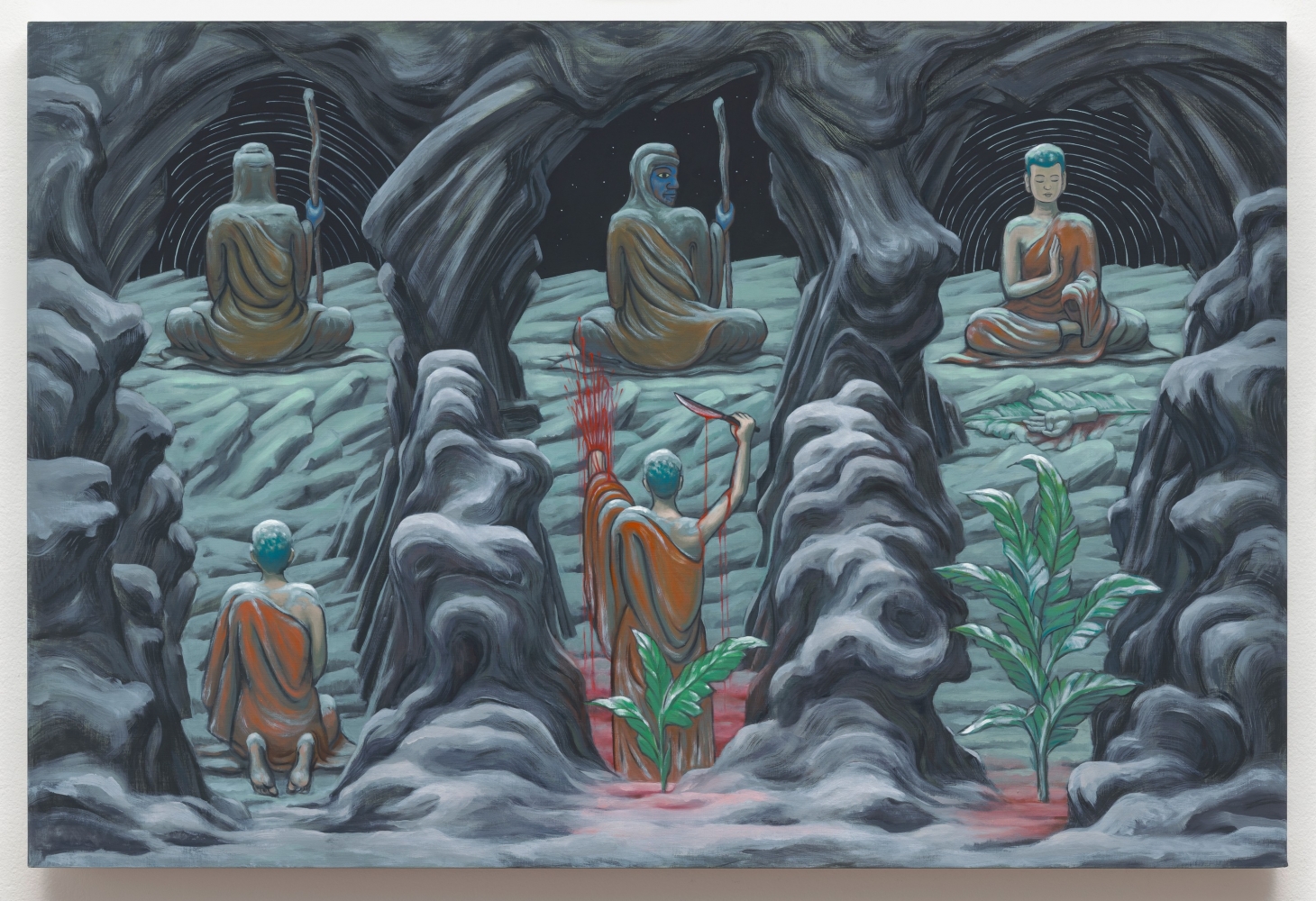
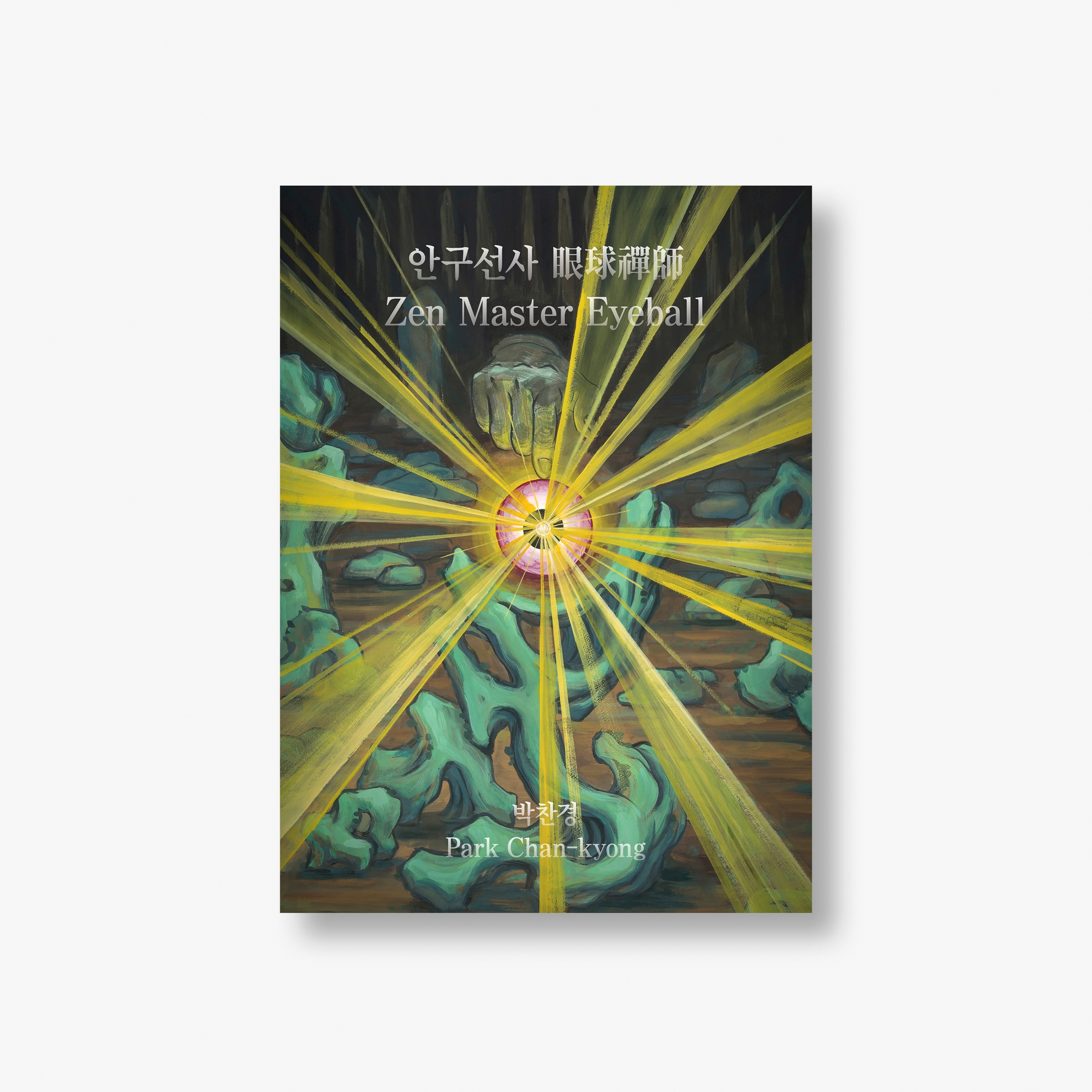
The work Zen Master Eyeball (2025) reimagines the wellknown Zen story of the monk Juzhi (known in Korea as Guji). In the original tale, Juzhi cut off the finger of a novice who merely imitated his gesture of raising a single finger to signify enlightenment without understanding it. Park adapts this story into a fictional narrative painting centered on the figure of “Zen Master Eyeball.” In the painting, the novice may be read as a metaphor for a painter—or even for the artist himself. The scene can thus be understood as a somewhat self-deprecating question posed by a visual artist who endlessly imitates others and only arrives at true insight after losing his eyes. Other works similarly transform episodes from Buddhist lore into what might be described as a kind of grotesque, Zeninspired science fiction. Huike Offering His Arm to Bodhidharma (2026) depicts the story of the monk Huike (Hyega), who cut off his arm to seek the Dharma, while Zen Master Hyetong (2025) reinterprets the tale of the monk Hyetong carrying a brazier on his head to demonstrate his determination to learn the Buddha’s teachings.
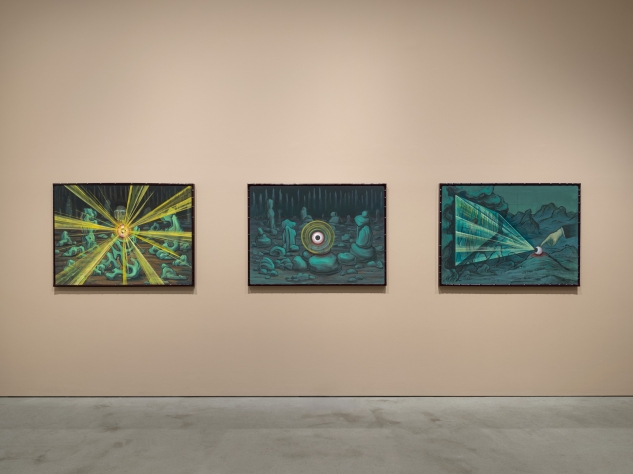
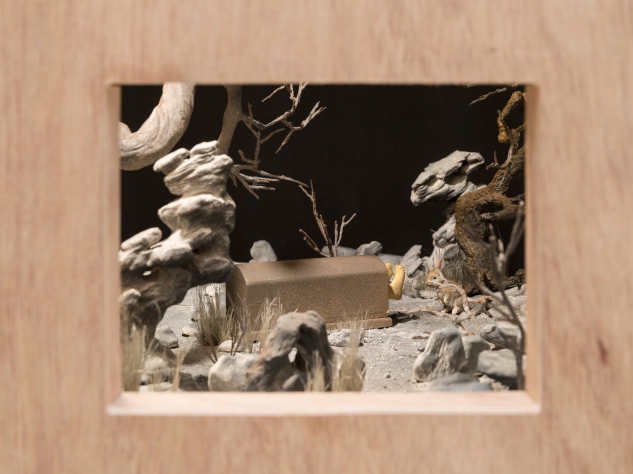
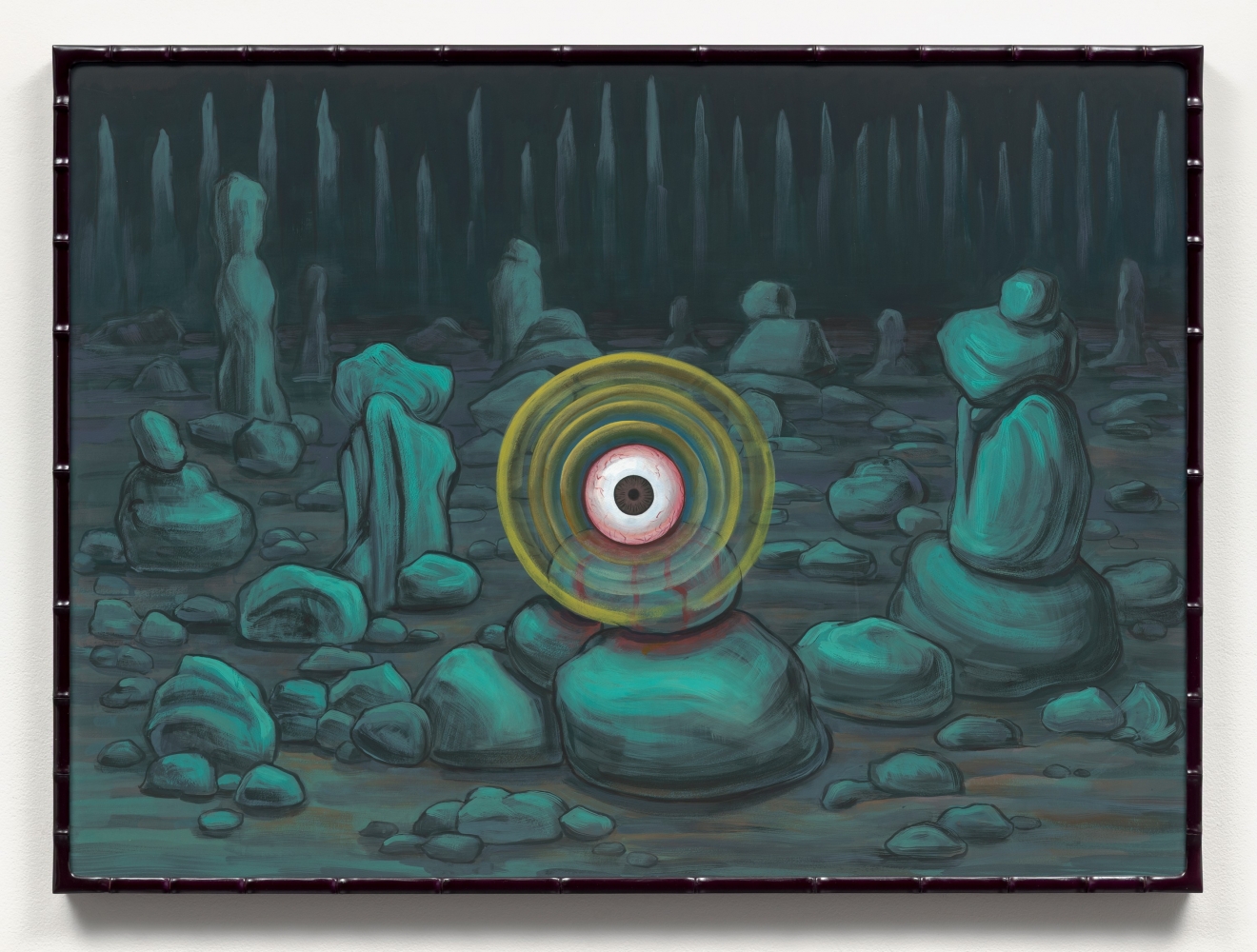
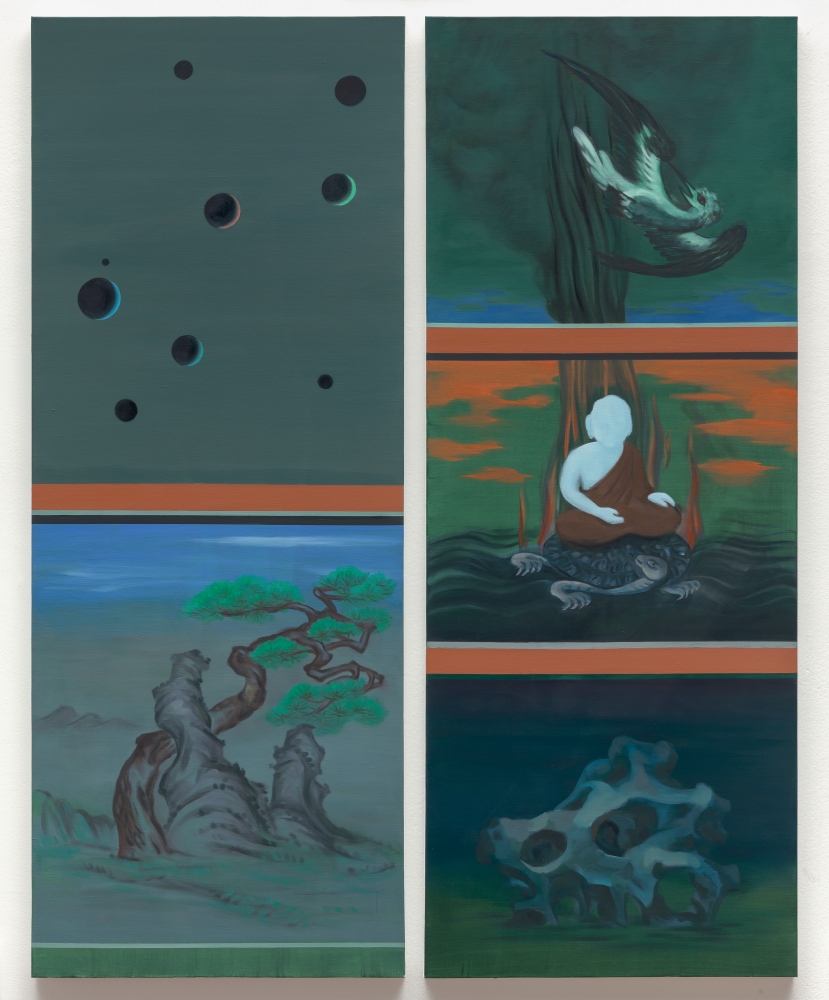
Meanwhile, Strange Rock 1 (2025), Strange Rocks (2025), and Projection series function as pictorial riddles that raise questions about hyeonhak (玄學), a Daoist concept referring to the mysterious order of the cosmos. Park suggests that historical paintings of strange rocks had already imagined a “universe without humans,” resonating with contemporary attempts to move beyond anthropocentric ways of thinking.
In Zen Master Eyeball, Park shifts from the film and photographic media that have long formed the core of his practice to the medium of painting. Yet, scenes referencing painting—such as Buddhist murals and folk paintings—have appeared repeatedly in his earlier works, and the artist has also consistently expressed his views on painting through his exhibitions and writings. Through this exhibition, Park conveys his latest reflections on painting, focusing less on individual originality or personal expression than on a form of anonymous creativity that emerges through processes of repetition and transmission accumulated over time within a community. In East Asian folk and landscape paintings, images have often placed other images within themselves, while echoing, borrowing from, and imitating wellknown precedents, ultimately to continuously renew themselves.
What emerges is not the assertion of singular authorship, but a form of collective originality—a theme that runs throughout the works in this exhibition.
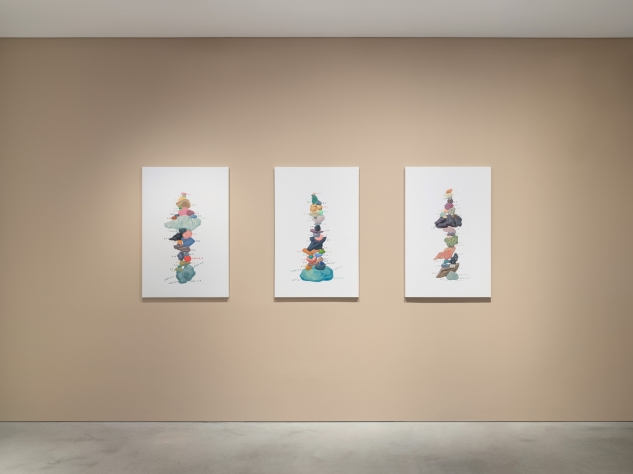
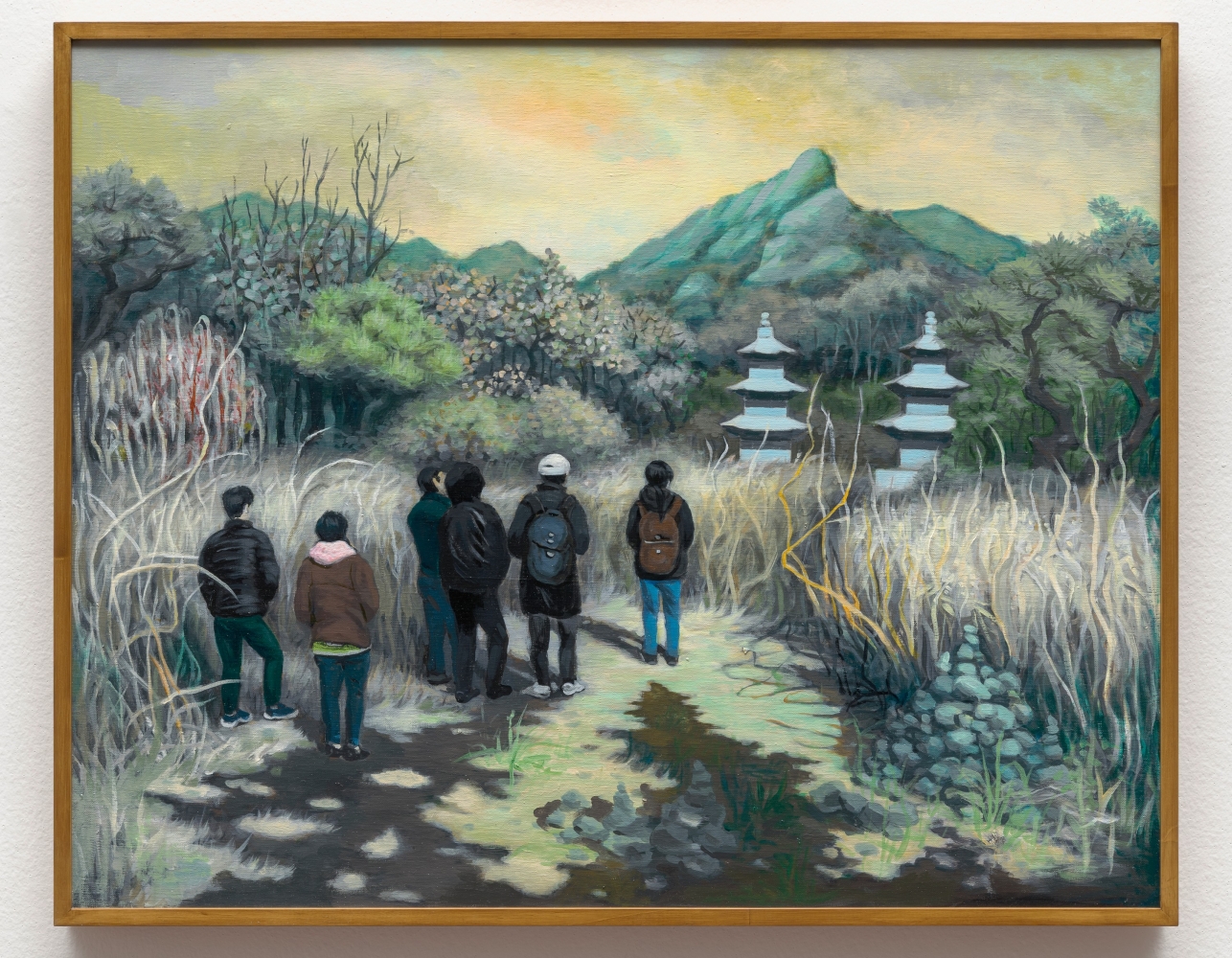
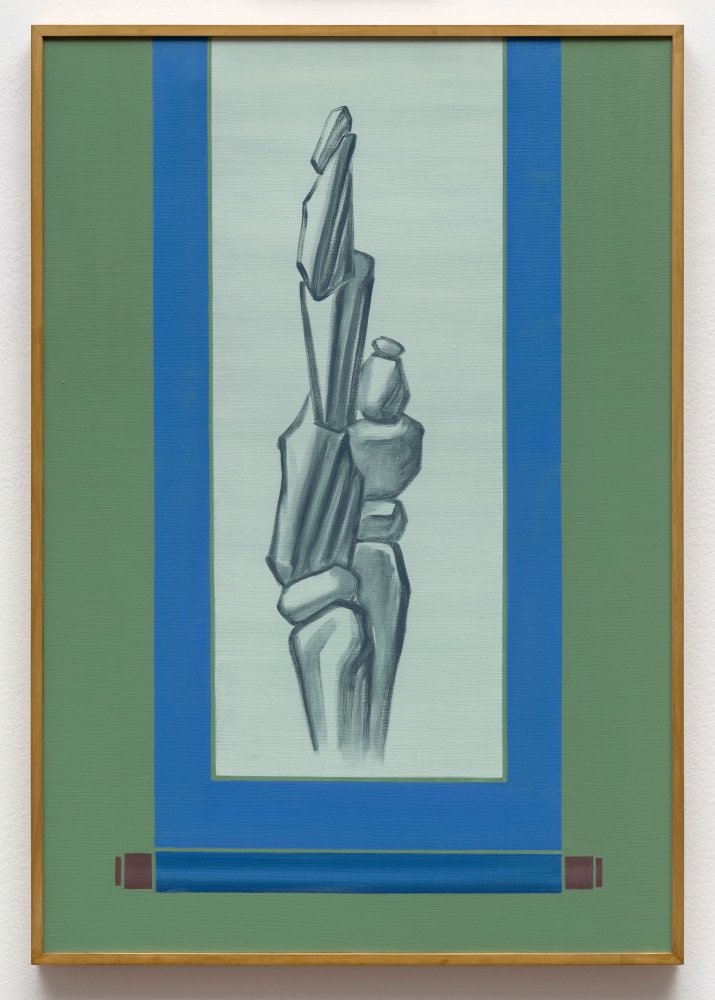
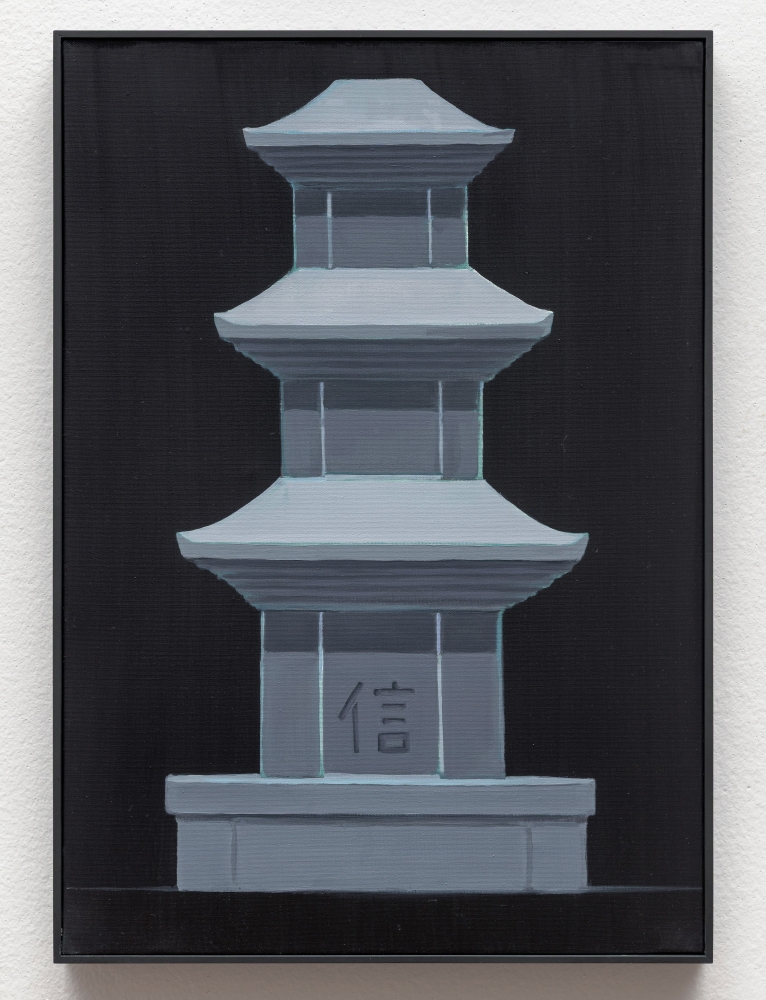
Another reflection on painting appears in the series Futile Effort, in which the artist paints a single stone each day and marks it with the date. Much like the humble act of stacking stones as a gesture of prayer or wish-making—an act with no practical function yet one that acquires an intimate and precious meaning precisely for that reason—the act of painting may likewise be understood as a form of “meaningful futility,” or as a suggestion that futility itself may hold meaning. If countless “eyeballs” staring at smartphones and monitors across contemporary society are driven to exhaustion, this “meaningful futility” evokes a ritualistic image that contrasts with the meaningless overwork of the nervous system.
About the Artist
Park Chan-kyong (b. 1965) is a Seoul-based artist. He received his BFA in Painting from Seoul National University in 1988 and his MFA in Photography from the California Institute of the Arts in 1995. In 2019, he was selected for the MMCA Hyundai Motor Series. Major solo exhibitions have been held at the Smithsonian National Museum of Asian Art, Washington, DC (2023); Kukje Gallery, Seoul (2017); and Atelier Hermès, Seoul (2008). He has also participated in the Seoul Mediacity Biennale (2025), Aichi Triennale (2019), and Taipei Biennial (2016). Park served as artistic director of the 2014 SeMA Biennale Mediacity Seoul. He has also continued his activities as a curator, including the exhibition A Faraway Today (2025) at Kukje Gallery. His works are held in the collections of the MMCA; Art Sonje Center; Solomon R. Guggenheim Museum; Tate Modern; KADIST; and M+.